
2025 August 18;6(8):1096-1100. doi: 10.37871/jbres2164.
-
Subject area(s):

 |
|
 |
|
 |
|

 Clinical Trails
Measuring Nitric Oxide, Reversing Disease and Mitigating Restenosis through Plant-Based Diet and Lifestyle
Dasaad Mulijono1-3*
2Indonesian College of Lifestyle Medicine, Indonesia
3Department of Cardiology, Faculty of Medicine, Prima University, Medan, Indonesia
- Nitric oxide
- Plant-based diet; Reversal of coronary artery disease
- Mitigating restenosis
- Erectile dysfunction
- Nitrate-nitrite-NO pathway
- Lifestyle medicine
- Bethsaida hospital
- Prof. Dasaad Mulijono
- Microbiota
- Salivary no strip
Abstract
Once underestimated, Nitric Oxide (NO) is now recognized as a crucial molecule in maintaining vascular health, supporting brain function, and modulating systemic diseases. Since its Nobel Prize-winning discovery in 1998, NO has re-emerged as both a robust biomarker and a therapeutic target, particularly within cardiovascular and lifestyle medicine.
This article explores the exclusively plant-based origins of NO precursors. It highlights how Bethsaida Hospital, Indonesia, under the leadership of Professor Dasaad Mulijono (DM), has pioneered the clinical use of salivary NO strip testing for nearly seven years. To our knowledge, Bethsaida is the first medical centre in Southeast Asia to adopt this simple, non-invasive method for monitoring NO levels in a clinical setting.
Salivary NO testing has provided an objective, point-of-care tool to assess dietary adherence, making it a key component of Bethsaida’s strategy in lifestyle-based disease reversal. This approach has demonstrated measurable success, with patients showing a reversal of atherosclerosis, reduced restenosis rates following Drug-Coated Balloon (DCB) angioplasty, and remission of chronic diseases such as hypertension, obesity, Type 2 Diabetes (T2D), and hyperlipidaemia-all conditions associated with elevated NO levels.
We critically examine the limitations of commercial NO supplements and the disruptive effects of commonly prescribed medications on endogenous NO pathways. In contrast, a Plant-Based Diet (PBD) has proven to be a superior and sustainable means of boosting NO production.
Bethsaida’s model offers a reproducible, scalable, and clinically effective framework for addressing the global chronic disease epidemic. It is grounded in evidence, innovation, and a commitment to root-cause solutions.
Introduction
The 1998 Nobel Prize in Physiology or Medicine was awarded to Drs. Robert F. Furchgott, Louis J. Ignarro, and Ferid Murad for their discovery of NO as a signalling molecule in the cardiovascular system [1]. This once-neglected gas has since been found to regulate blood pressure, inhibit platelet aggregation, repair endothelial dysfunction, prevent atherosclerosis, enhance cognitive function, and facilitate penile erection [2-11]. Despite these far-reaching benefits, NO remains underutilized in clinical practice and underappreciated by the public, particularly its unique derivation from a PBD.
The physiology and importance of nitric oxide
NO is a potent vasodilator produced through two main pathways: the endogenous L-arginine-NO synthase pathway and the entero-salivary nitrate–nitrite NO pathway. The latter, which is more reliable and sustainable, depends on the dietary intake of nitrate-rich vegetables [12]. NO enhances endothelial function, prevents arterial stiffness, improves insulin sensitivity, modulates neuroinflammation, and promotes smooth muscle relaxation in the artery [13,14].
Clinical applications of nitric oxide
Coronary Artery Disease (CAD): NO prevents endothelial dysfunction and inhibits the formation of atherosclerotic plaques. Its vasodilatory effects improve perfusion in ischemic myocardium. At Bethsaida Hospital, NO monitoring via salivary strips has been implemented to assess patient adherence to dietary reversal protocols in CAD management. We have observed significant improvements in angina symptoms, exercise tolerance, and even regression of atherosclerotic plaques, as well as a decrease in the risk of restenosis after coronary interventions [9,10,12-14].
Cognitive Health: NO supports neurovascular coupling and cerebral blood flow, which are crucial for memory and cognition. A PBD has been linked to improve NO levels and a lower risk of cognitive decline [7,8].
Erectile Dysfunction (ED): Phosphodiesterase inhibitors, such as sildenafil, rely on the NO pathway. Many cases of ED are vascular in origin, and our data indicate significant reversal of symptoms in patients adhering to nitrate-rich PBD [2].
Sources of Nitric Oxide: Why are Plants the primary source?
High-nitrate vegetables, such as spinach, arugula, beets, celery, and lettuce, are rich in nitrates, which are essential for NO production. Oral bacteria convert these nitrates into nitrites and, ultimately, into NO. Only a limited number of animal-derived products contain NO precursors. Additionally, animal products can impair endothelial function and increase oxidative stress, thereby decreasing NO bioavailability [16,17] (Figure 1).
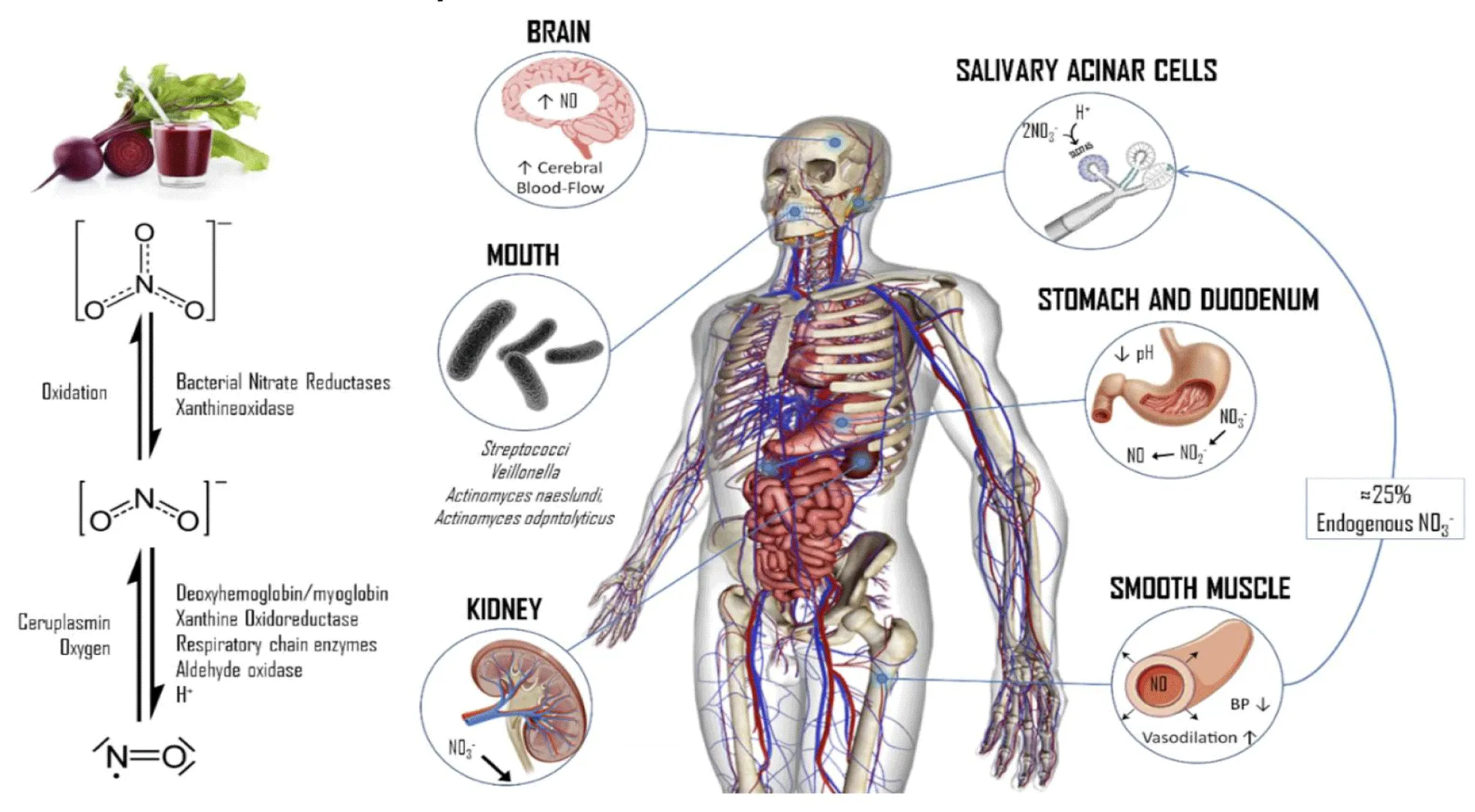
The nitrate/nitrite/nitric oxide (NO3−/NO2−/NO) pathway after dietary NO3− ingestion. Next to the ingestion of high-nitrate vegetables, the oral microbiota on the posterior surface of the tongue is capable of reducing NO3− to NO2− through their enzymatic machinery. The strict anaerobes Veillonella atypica and Veillonella dispar are the most essential NO3− reducers; however, Actinomyces, Rothia, Prevotella, Neisseria, and Haemophilus are also present in the oral cavity. Even though this nonenzymatic reduction process continues in the stomach, where more NO2− and NO are produced due to the acid environment, a considerable amount of NO3− from blood (≈ 25%) is taken up by an electrogenic 2NO3−/H+ symporter called SLC17A5 (also known as sialin) in the salivary gland acinar cells. Both dietary and saliva NO3−, and its reduced forms NO2− and NO, enter directly into systemic circulation after the absorption process in the stomach and intestine. Thus, the increase in NO3− and NO2− concentrations in blood allows the generation of NO by either enzymatic or non-enzymatic mechanisms (such as xanthine oxidoreductase, respiratory chain enzymes, aldehyde oxidase, and methemoglobin formation, among others), especially under physiologic hypoxia and low pH. Because of its short half-life (1-2 ms), once NO is produced in the blood, it is broken down by hemoglobin or it can diffuse into vascular smooth muscle cells or neurons and bind to guanylyl cyclase, allowing for the allosteric activation of this enzyme and subsequent cGMP production. Here, cGMP acts as a second messenger and activates PKG, which in turn can modulate smooth muscle relaxation by several interlinked mechanisms: (i) activation of K+ channels leading to hyperpolarization; (ii) reduction of intracellular Ca2+ concentration; and (iii) activation of the myosin light-chain phosphatase. Finally, NO3− is usually excreted in the urine by the kidneys.
Mechanism of conversion: Role of microbiota
The enterosalivary pathway begins with the absorption of nitrate in the upper GI tract, followed by its secretion into saliva, and subsequent reduction to nitrite by oral bacteria. Nitrite is further converted to NO in the acidic and systemic environments of the stomach. A healthy oral and gut microbiota is crucial in this process, making dietary and lifestyle choices vital [15,16].
Factors that inhibit NO production:
- Mouthwash: Antibacterial mouthwashes destroy beneficial oral nitrate-reducing bacteria [18].
- Proton Pump Inhibitors (PPIs): PPIs reduce gastric acidity, impairing the conversion of nitrite to NO [19].
- Antibiotics disrupt gut microbiota, reducing systemic NO availability [20].
The protein supplement scam
Despite marketing claims, many arginine-based supplements fail to significantly increase systemic NO, especially in individuals with endothelial dysfunction. The L-arginine pathway is less reliable and more energy-intensive [21]. Only PBD provides a direct, efficient, and sustainable source of nitrate for NO production.
What may increase NO apart from PBD?
Exercise: Regular aerobic exercise enhances endothelial NO synthase activity, increases blood flow, and improves vascular responsiveness, contributing to higher systemic NO levels [22,23].
Breathing techniques: Nasal breathing and specific breath-holding exercises can enhance endogenous NO production. NO is naturally produced in the paranasal sinuses and delivered to the lungs during nasal breathing, enhancing pulmonary oxygenation and vascular function [24,25].
World-class cardiac services at Bethsaida hospital
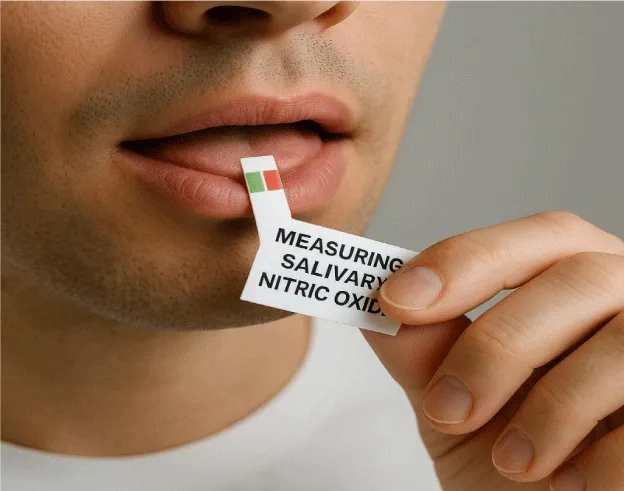
For nearly seven years, Bethsaida Hospital has been the only centre in Indonesia systematically using salivary NO strip testing to assess adherence to lifestyle interventions. These strips offer a non-invasive, affordable, and patient-friendly method to determine how well patients follow dietary recommendations rich in NO-producing foods (Figure 2). Patients with high NO levels correlate with better clinical outcomes, including:
- Lower restenosis rates after DCB angioplasty.
- Regression of coronary atherosclerosis.
- Reversal of many chronic diseases such as hypertension, obesity, hyperlipidaemia, T2D, kidney dysfunction, etc.
- Improved outcomes in lifestyle-related chronic diseases.
Home monitoring
We encourage patients to use NO strips at home to monitor their lifestyle changes in real-time. This approach fosters self-responsibility and reinforces adherence to a PBD, regular physical activity, adequate rest, stress management, and avoiding substances that may reduce NO levels.
Future directions
Although salivary strips are useful for broad monitoring, future development must focus on tools with higher sensitivity and specificity for assessing NO in the bloodstream. Technologies such as plasma nitrate/nitrite assays, wearable biosensors, and lab-on-a-chip devices could offer deeper insights into systemic NO levels, especially in complex clinical cases. Integrating NO measurement into AI-driven lifestyle medicine platforms is also being explored at our centre to optimize patient outcomes.
Planned collaborations and future clinical trials: To further validate our findings, Bethsaida Hospital is actively seeking collaborations with both national and international partners. The primary focus will be on multicentre prospective trials designed to assess the impact of nitrate-rich whole-food plant-based diets—monitored via salivary NO testing-on restenosis rates, atherosclerosis regression, and overall cardiovascular outcomes.
Potential collaboration pathways include:
- Academic medical centres – Discussions are ongoing with Southeast Asian lifestyle medicine institutes and leading cardiology departments in Australia to integrate NO monitoring into existing coronary intervention research protocols.
- Technology partnerships – Collaboration with diagnostic device manufacturers to improve the sensitivity of salivary NO strips and develop AI-driven digital platforms for remote monitoring.
- Nutrition science collaborations – Partnering with public health universities to investigate the gut–oral microbiome–NO axis in diverse dietary patterns.
- Randomized Controlled Trials (RCTs) – Proposed RCTs comparing:
- Standard post-PCI care vs. post-PCI care plus PBD + NO monitoring.
- NO outcomes in DCB vs. DES cohorts.
- Longitudinal community Studies – Large-scale observational cohorts tracking NO levels, dietary adherence, and chronic disease incidence in both rural and urban Indonesian populations.
- By combining multicentre RCTs, microbiome analysis, and AI-enabled remote tracking, we aim to produce high-level evidence that can influence both interventional cardiology guidelines and public health nutrition policies worldwide.
Conclusion
NO is an essential molecule for human health, yet it remains underutilized and underappreciated. The only reliable and sustainable way to boost NO production is through a PBD. Bethsaida Hospital has demonstrated how routine NO assessment can transform chronic disease management, offering hope for disease reversal rather than just control. With future advancements in NO detection technology, lifestyle education, and dietary reform, we envision a healthcare paradigm rooted in prevention and natural healing.
References
- Rabelink AJ. Nobelprijs Geneeskunde en Fysiologie 1998 vanwege de betekenis van stikstofmonoxide als signaalmolecuul [Nobel prize in Medicine and Physiology 1998 for the discovery of the role of nitric oxide as a signalling molecule]. Ned Tijdschr Geneeskd. 1998 Dec 26;142(52):2828-30. Dutch. PMID: 10065255.
- Argiolas A, Argiolas FM, Argiolas G, Melis MR. Erectile Dysfunction: Treatments, Advances and New Therapeutic Strategies. Brain Sci. 2023 May 15;13(5):802. doi: 10.3390/brainsci13050802. PMID: 37239274; PMCID: PMC10216368.
- Bryan NS. Nitric oxide deficiency is a primary driver of hypertension. Biochem Pharmacol. 2022 Dec;206:115325. doi: 10.1016/j.bcp.2022.115325. Epub 2022 Nov 5. PMID: 36349641.
- Hermann M, Flammer A, Lüscher TF. Nitric oxide in hypertension. J Clin Hypertens (Greenwich). 2006 Dec;8(12 Suppl 4):17-29. doi: 10.1111/j.1524-6175.2006.06032.x. PMID: 17170603; PMCID: PMC8109558.
- Riddell DR, Owen JS. Nitric oxide and platelet aggregation. Vitam Horm. 1999;57:25-48. doi: 10.1016/s0083-6729(08)60639-1. PMID: 10232045.
- Loscalzo J. Nitric oxide insufficiency, platelet activation, and arterial thrombosis. Circ Res. 2001 Apr 27;88(8):756-62. doi: 10.1161/hh0801.089861. PMID: 11325866.
- Paul V, Ekambaram P. Involvement of nitric oxide in learning & memory processes. Indian J Med Res. 2011 May;133(5):471-8. PMID: 21623030; PMCID: PMC3121276.
- Zhang X, Chen Z, Xiong Y, Zhou Q, Zhu LQ, Liu D. The emerging role of nitric oxide in the synaptic dysfunction of vascular dementia. Neural Regen Res. 2025 Feb 1;20(2):402-415. doi: 10.4103/NRR.NRR-D-23-01353. Epub 2024 Jan 31. PMID: 38819044; PMCID: PMC11317957.
- Napoli C, de Nigris F, Williams-Ignarro S, Pignalosa O, Sica V, Ignarro LJ. Nitric oxide and atherosclerosis: an update. Nitric Oxide. 2006 Dec;15(4):265-79. doi: 10.1016/j.niox.2006.03.011. Epub 2006 Apr 15. PMID: 16684613.
- Yang L, Li X, Ni L, Lin Y. Treatment of endothelial cell dysfunction in atherosclerosis: a new perspective integrating traditional and modern approaches. Front Physiol. 2025 Mar 26;16:1555118. doi: 10.3389/fphys.2025.1555118. PMID: 40206381; PMCID: PMC11979162.
- Wang X, He B. Endothelial dysfunction: molecular mechanisms and clinical implications. MedComm (2020). 2024 Jul 22;5(8):e651. doi: 10.1002/mco2.651. PMID: 39040847; PMCID: PMC11261813.
- Bondonno CP, Croft KD, Hodgson JM. Dietary Nitrate, Nitric Oxide, and Cardiovascular Health. Crit Rev Food Sci Nutr. 2016 Sep 9;56(12):2036-52. doi: 10.1080/10408398.2013.811212. PMID: 25976309.
- Tran N, Garcia T, Aniqa M, Ali S, Ally A, Nauli SM. Endothelial Nitric Oxide Synthase (eNOS) and the Cardiovascular System: in Physiology and in Disease States. Am J Biomed Sci Res. 2022;15(2):153-177. Epub 2022 Jan 4. PMID: 35072089; PMCID: PMC8774925.
- Medina-Leyte DJ, Zepeda-García O, Domínguez-Pérez M, González-Garrido A, Villarreal-Molina T, Jacobo-Albavera L. Endothelial Dysfunction, Inflammation and Coronary Artery Disease: Potential Biomarkers and Promising Therapeutical Approaches. Int J Mol Sci. 2021 Apr 8;22(8):3850. doi: 10.3390/ijms22083850. PMID: 33917744; PMCID: PMC8068178.
- Corpas FJ, González-Gordo S, Palma JM. NO source in higher plants: present and future of an unresolved question. Trends Plant Sci. 2022 Feb;27(2):116-119. doi: 10.1016/j.tplants.2021.11.016. Epub 2021 Dec 8. PMID: 34893427.
- EFSA Panel on Contaminants in the Food Chain (CONTAM); Schrenk D, Bignami M, Bodin L, Chipman JK, Del Mazo J, Grasl-Kraupp B, Hoogenboom LR, Leblanc JC, Nebbia CS, Nielsen E, Ntzani E, Petersen A, Sand S, Schwerdtle T, Vleminckx C, Wallace H, Bampidis V, Cottrill B, Frutos MJ, Furst P, Parker A, Binaglia M, Christodoulidou A, Gergelova P, Guajardo IM, Wenger C, Hogstrand C. Risk assessment of nitrate and nitrite in feed. EFSA J. 2020 Nov 4;18(11):e06290. doi: 10.2903/j.efsa.2020.6290. PMID: 33173543; PMCID: PMC7610142.
- Rajendra A, Bondonno NP, Zhong L, Radavelli-Bagatini S, Murray K, Rainey-Smith SR, Gardener SL, Blekkenhorst LC, Magliano DJ, Shaw JE, Daly RM, Anstey KJ, Lewis JR, Hodgson JM, Bondonno CP. Plant but not animal sourced nitrate intake is associated with lower dementia-related mortality in the Australian Diabetes, Obesity, and Lifestyle Study. Front Nutr. 2024 Aug 21;11:1327042. doi: 10.3389/fnut.2024.1327042. PMID: 39234294; PMCID: PMC11371772.
- Bondonno CP, Liu AH, Croft KD, Considine MJ, Puddey IB, Woodman RJ, Hodgson JM. Antibacterial mouthwash blunts oral nitrate reduction and increases blood pressure in treated hypertensive men and women. Am J Hypertens. 2015 May;28(5):572-5. doi: 10.1093/ajh/hpu192. Epub 2014 Oct 30. PMID: 25359409.
- Sukhovershin RA, Cooke JP. How May Proton Pump Inhibitors Impair Cardiovascular Health? Am J Cardiovasc Drugs. 2016 Jun;16(3):153-61. doi: 10.1007/s40256-016-0160-9. PMID: 26817947; PMCID: PMC4864131.
- Konstantinidis T, Tsigalou C, Karvelas A, Stavropoulou E, Voidarou C, Bezirtzoglou E. Effects of Antibiotics upon the Gut Microbiome: A Review of the Literature. Biomedicines. 2020 Nov 16;8(11):502. doi: 10.3390/biomedicines8110502. PMID: 33207631; PMCID: PMC7696078.
- Alvares TS, Conte-Junior CA, Silva JT, Paschoalin VM. Acute L-Arginine supplementation does not increase nitric oxide production in healthy subjects. Nutr Metab (Lond). 2012 Jun 12;9(1):54. doi: 10.1186/1743-7075-9-54. PMID: 22691607; PMCID: PMC3489573.
- Green DJ, Maiorana A, O'Driscoll G, Taylor R. Effect of exercise training on endothelium-derived nitric oxide function in humans. J Physiol. 2004 Nov 15;561(Pt 1):1-25. doi: 10.1113/jphysiol.2004.068197. Epub 2004 Sep 16. PMID: 15375191; PMCID: PMC1665322.
- Seals DR. Edward F. Adolph Distinguished Lecture: The remarkable anti-aging effects of aerobic exercise on systemic arteries. J Appl Physiol (1985). 2014 Sep 1;117(5):425-39. doi: 10.1152/japplphysiol.00362.2014. Epub 2014 May 22. PMID: 24855137; PMCID: PMC4157159.
- Lundberg JO. Nitric oxide and the paranasal sinuses. Anat Rec (Hoboken). 2008 Nov;291(11):1479-84. doi: 10.1002/ar.20782. PMID: 18951492.
- Weitzberg E, Lundberg JO. Humming greatly increases nasal nitric oxide. Am J Respir Crit Care Med. 2002 Jul 15;166(2):144-5. doi: 10.1164/rccm.200202-138BC. PMID: 12119224.




Content Alerts
SignUp to our
Content alerts.
 This work is licensed under a Creative Commons Attribution 4.0 International License.
