
Medicine Group 2025 March 08;6(3):214-220. doi: 10.37871/jbres2075.





 Original Article
Adjuncts to Cleft Rhinoplasty and Beyond the Core Procedure
SM Ng#, I Sakin* and D Atherton
#First co-authorship due to equal contribution.
- Cleft lip
- Septorhinoplasty
- Lip revision
- Lip enhancement
- PermaLip
- Dermal graft
Abstract
Cleft lip nasal anomalies result in distinct characteristics affecting various aspects of the nose including rotation and projection, columella and septal deviation, and asymmetry of the rim and alar base. This study aims to evaluate the type and frequency of surgical adjuncts performed during a series of consecutive cleft septorhinoplasty performed over a 10-year period.
Patient demographics, procedures performed, and details of supplementary procedures, including lip revision, lip augmentation, composite grafts and alar base procedures were analysed. 109 patient records were included (67 females, 42 males, aged 7-53) who underwent cleft septorhinoplasty between June 2013 and March 2024.
Simultaneously, 30% (n = 33) had alar base adjustments (Weir excisions, sill excisions, combined Weir and sill excisions, alar base transpositions). 16% (n = 17) underwent alar base augmentation (morselised cartilage in 7 cases, paranasal implants in 10 cases). 8 composite conchal grafts were used to lower asymmetrical nostril rims. 46% of patients (n = 50) had lip scar revision surgery; 28% (n = 20) had a dermal graft to the upper lip. 5 patients had lip augmentation using free fat grafting and 6 with a PermaLip implant. Overall, 29% (n = 32) of cases had some form of lip revision surgery performed simultaneously with their rhinoplasty.
The incorporation of surgical adjuncts in cleft septorhinoplasty improves patient profile and symmetry. The decision to use them is based on individual assessment but can combine to improve final aesthetic outcomes with the potential benefit of avoiding separate lip surgeries.
Introduction
Affecting around one in 500 to 1,000 newborns, cleft lip and palate is one of the most common congenital craniofacial anomalies. Unilateral and bilateral cleft lip patients present with their own unique characteristics affecting the symmetry of nose, columella, nasal ala, alar base and more [1]. Rhinoplasty is a surgical intervention aimed at improving the external appearance of the nose and maintaining the functionality of the nasal airway and addressing both functional and aesthetic nasal concerns poses a significant challenge [2].
In a Unilateral Cleft And Palate (UCLP), rhinoplasty aims to reposition the Lower Lateral Cartilage (LLC) on the cleft side, achieve dome symmetry, align the caudal septum, lengthen the columella, address alar webbing, reposition the cleft alar base medially, and provide structural support [3].The complexity of these manoeuvres contributes to the difficulty of the operation. Bilateral Cleft Lip and Palate (BCLP) is among the most severe oral clefts [4], presenting with a broader nose, a more prominent nasal bridge and extended soft tissue alar rims [5].
The aims of this study were to review 109 consecutive cases of secondary cleft rhinoplasty in the senior authors practice, noting in particular the type and number of adjunctive procedures used, outside of the core steps of a septorhinoplasty. While somewhat artificial to divide the procedure into core elements and adjunctive ones; it is our belief that by employing the principles of the “aggregation of marginal gains” [6] these adjuncts offer the opportunity for additional small but cumulative gains towards the end of the procedure.
Materials and Methods
Data from cleft-related septorhinoplasties conducted by a single surgeon at a London-based tertiary cleft unit between June 2013 and March 2024 were gathered. The collected information encompassed patient demographics, procedures undertaken, age at the time of cleft septorhinoplasty, and details of supplementary procedures, including lip revision, lip augmentation, alar base augmentation, or alar base narrowing. These data were then analysed.
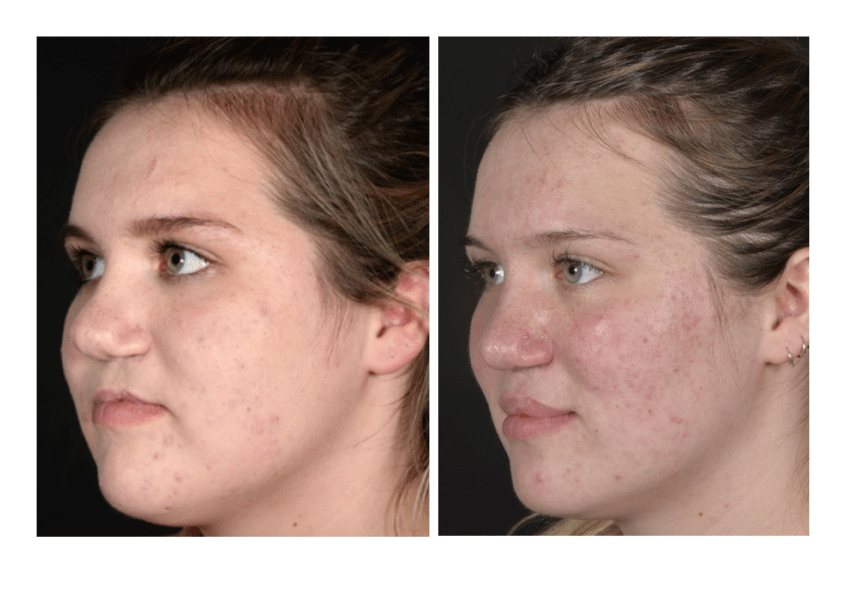
The surgeons’ main septorhinoplasty was performed in an open manner with a component separation. If needed, any dorsal reduction required was performed, but if there was no dorsal hump/open roof, and if any movement of the bones was required; open or close wedge osteotomies were done. A classical septoplasty followed but in severe cases, an extracorporeal septoplasty (n = 5) was used. Auto spreaders flaps or formal spreader grafts were used to maintain the airway and to aid straightening. The tip position was restored with either a septal extension graft or columellar strut and a lateral crural extension graft with typical outcome as seen in figure 1.
Adjuncts outside of this core procedure were noted and these included any repositioning of the alar bases (Weir or sill excisions, or combinations thereof); alar base augmentation; lip surgery including scar revision or augmentation; and composite grafts to the alar rim.
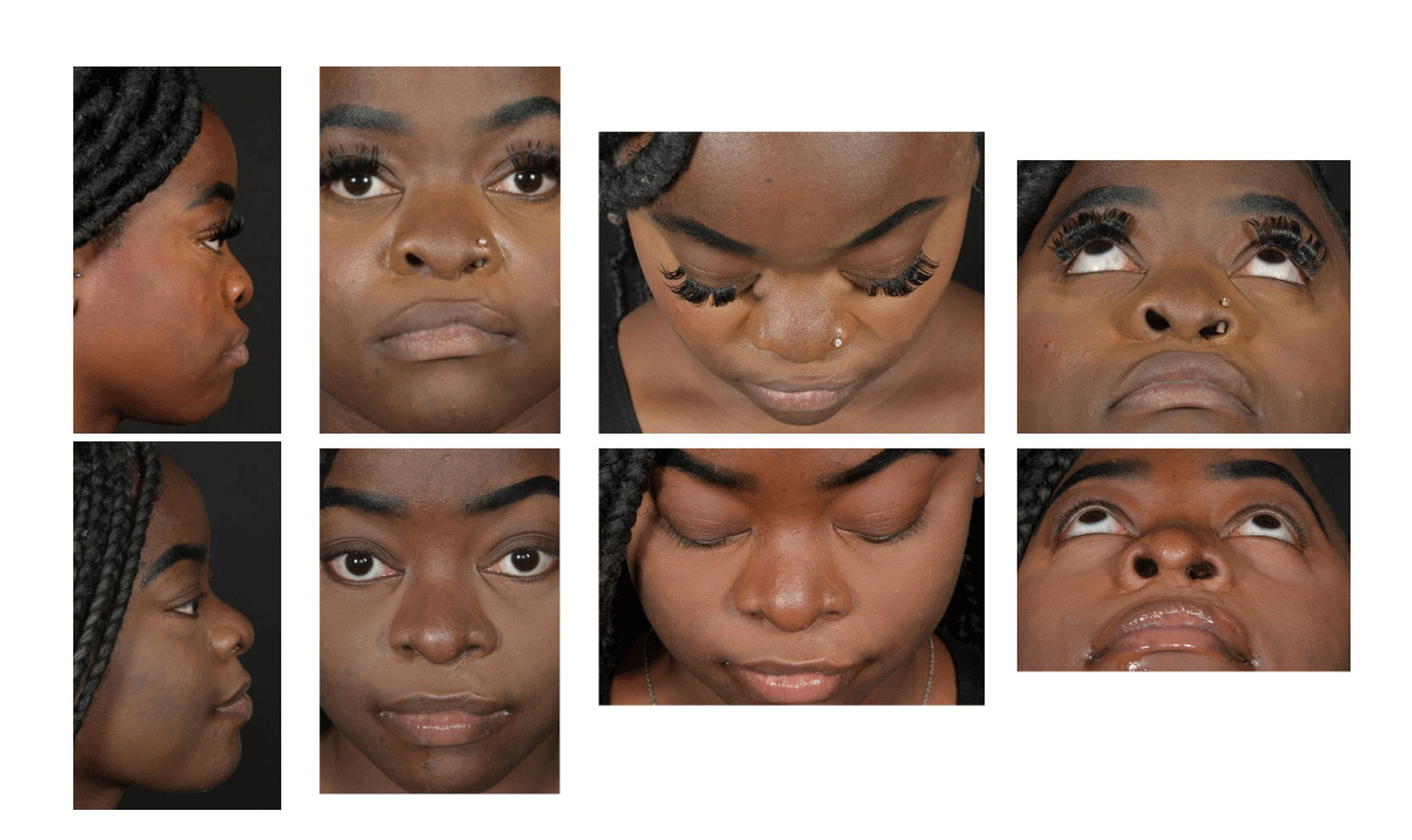
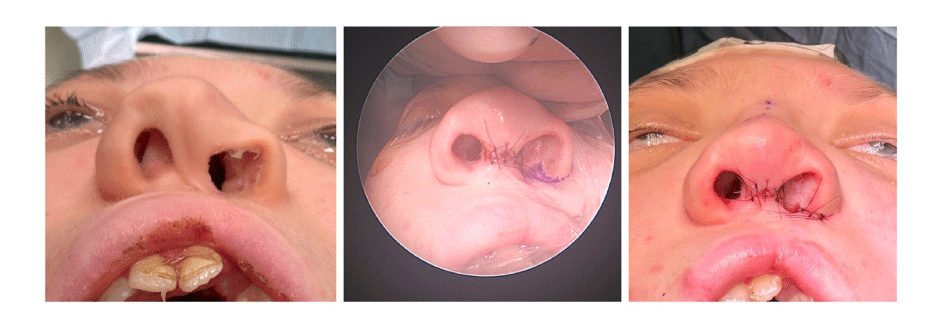
Alar base adjustments were performed at the end of the procedure after the transcolumellar and rim incisions were closed. The appropriate technique was chosen to maximally improve alar symmetry in a unilateral or bilateral manner. Where appropriate, the posterior piriform aperture was augmented using Medpor implants, which were inserted through a buccal sulcus incision as previously described [7,8]. For smaller movements, finely morselized cartilage was placed in a precise pocket at the piriform aperture using a 1 mL syringe. Where the ala was flared, a classical Weir excision we as performed (Figure 2a); when the sill was wide; a sill excision was performed (Figure 2b) and these can be combined unilaterally or bilaterally (Figure 2c). Clinical cases are shown in figures 3 and 4. In cases of severe nostril stenosis; this was opened up in by transposition flaps; designed as a Z-plasty, with the alar root as one limb of the Z, and an inferiorly based flap from outside the alar, transposed into the narrowed sill as the other (Figures 2di and 2dii).

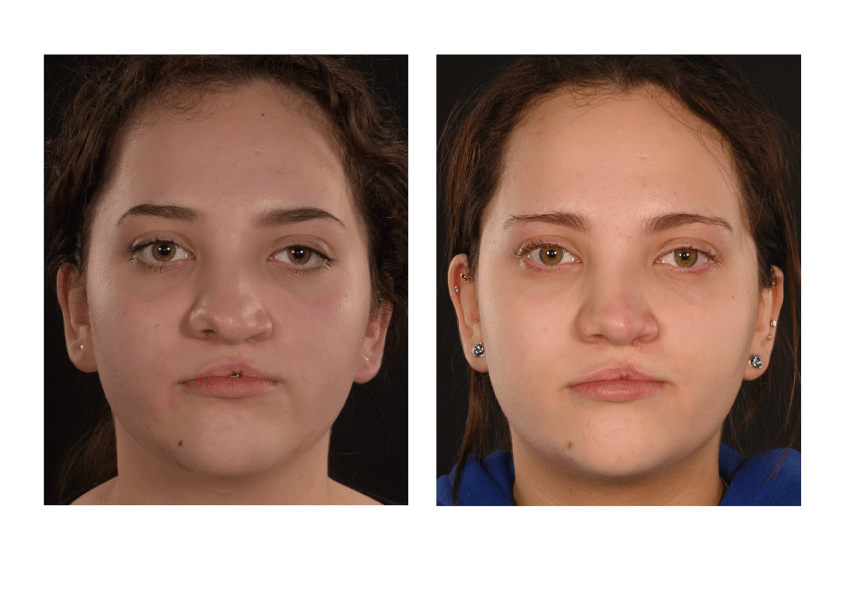
Lip scar surgery was performed where requested by the patient, addressing any relevant concerns such as shortened philtral height. Lip augmentation was either achieved with simple free fat transfer; Permalip silicone implant augmentation or dermal graft augmentation as described previously [9,10] (Figure 5).
Composite grafts were harvested from the anterior concha, with the donor site aligned vertically just before the transition of the concha into the antihelix. These grafts were used in cases of residual rim asymmetry that could not be resolved by adjusting the intermediate and lower lateral crura during the main operation and after the closure of the transcolumellar incision. The grafts were then inserted through the infracartilaginous incision.
Results
A total of 109 patients were included and had their data analysed. There were 67 female patients and 42 male patients, aged between 16 - 53 years of age. All patients underwent cleft septorhinoplasty. The vast majority (n = 62) were UCLP cases (Table 1). Five cases of isolated cleft palate underwent surgery for severe aesthetic and functional deviation.
| Table 1: Table to show distribution of cleft sub type of the cleft septorhinoplasties performed. | |
| Cleft Type | Number of Cases |
| UCLP | 62 |
| BCLP | 26 |
| ICP | 5 |
| UCLA | 10 |
| UCL | 6 |
| TOTAL | 109 |
11 cases had had a previous adult cleft rhinoplasty with a different surgeon. 4 cases were revisions of the senior authors own prior rhinoplasties. 33/109 cases had an alar base adjustment (Table 2) (including 6 Weir excisions; 15 sill excisions; 8 combined Weir and sill excisions and 4 alar base transpositions). According to Lamb, et al. [11] the nasal sill is an often overlooked, yet essential, part of creating an aesthetically pleasing nose during cleft rhinoplasty. 17 cases underwent simultaneous alar base augmentation; 7 using diced cartilage and 10 using paranasal implants (Medpor) (Table 3).
| Table 2: Table to show numbers and types of alar base adjustments across the series. | |
| Type of Alar Base Adjustment | Number of Cases |
| Weir excision | 6 |
| Sill excision | 15 |
| Combined Weir and sill excision | 8 |
| Alar base transposition | 4 |
| TOTAL | 33/109 |
| Table 3: Table to show type and numbers of alar base augmentation performed. | |
| Type of Alar Base Augmentation | Number of Cases |
| Medpor implant | 10 |
| Diced cartilage | 7 |
| TOTAL | 17/109 |
As seen in table 4, 46% of patients (50/109) had adult lip scar revision surgery; 28% (20/109) had a dermal graft to the upper lip. 5 cases had lip augmentation using free fat grafting and 6 with a Permalip implant. Overall, 29% of cases (32/109) had some form of lip revision, either to the lip scar or by augmentation, performed simultaneously with their rhinoplasty.
| Table 4: Table to show numbers and types of adjunctive cleft lip surgeries performed in patients also undergoing cleft rhinoplasty. | ||||
| Type of Adjunctive Lip Surgery | Performed before “adult” rhinoplasty | Performed simultaneously with rhinoplasty | Performed subsequent to rhinoplasty | Total |
| Permalip implant | 2 | 2 | 2 | 6 |
| Free fat grafting | 1 | 1 | 3 | 5 |
| Dermal fat graft | 13 | 12 | 5 | 30 |
| Lip scar revision | 15 | 17 | 18 | 50 |
| TOTAL | 31 | 32 | 28 | |
There were 8 composite skin and auricular cartilage grafts used; 4 were done simultaneously with the septorhinoplasty and 4 as a subsequent, closed revision, to lower a persistently asymmetrical rim.
Discussion
This study of 109 patients undergoing cleft septorhinoplasty highlights the complexity of achieving optimal outcomes. Alar base adjustments were performed nearly a third of cases. Overall, lip revision was a key adjunct, with considering 46% of patients undergoing adult scar revision and 29% receiving simultaneous lip modifications. Composite grafts were preferred in selected cases for persistent asymmetry. These findings reinforce the importance of tailored adjunctive procedures to enhance both function and aesthetics, minimising the need for further revisions.
In cleft lip cases, primary repair often takes place between 3 – 6 months of age with or without a primary nasal correction [12]. Secondary bony and soft tissue anomalies often persist; however, a cleft lip significantly affects nasal shape due to the discontinuity in the orbicularis oris and skeletal hypoplasia of the maxilla [13], resulting in notable aesthetic and functional challenges, particularly in nasal asymmetry. Depression or lack of bony support at the pyriform aperture on the cleft side contributes to the alar base being displaced infero-posterolaterally [14] which commonly becomes more pronounced as patients mature. Addressing this issue post-skeletal maturity involves secondary rhinoplasty, a more intricate procedure than primary rhinoplasty [15]. Surgeons commonly employ techniques such as septoplasty, cartilage grafting and alar base narrowing to enhance the appearance and function of the nose in patients with UCL [16]. Given the posterior location of the cleft side alar base compared to the non-cleft side and the more posterior position of the cleft side pyriform aperture compared to the non-cleft side, alar base augmentation on the cleft side can be helpful.
This operation remains one of the most challenging procedures in cleft care and achieving complete restoration of symmetry and aesthetics often remains elusive; especially when compared to performing rhinoplasty in the non-cleft population. “The aggregation of marginal gains” is a concept popularized by Dave Brailsford, director of cycling for the Team GB cycling during the 2012 Olympics [6]. He ascribed their subsequent success to the concept of looking for a “1% improvement in everything you do” and a similar concept can be applied to all surgery and indeed cleft rhinoplasty where gains can be frustrating to achieve. As such, this study looks around the edges of the procedure to try to find those marginal gains outside of the main steps of the operation. Of course, it is slightly artificial to divide cleft rhinoplasty into a core procedure and adjuncts, but it is also worth pointing out that most of these adjuncts are optional and are usually done towards the end of a long procedure and are easy to neglect in the desire to finish the case and return the patient safely to recovery. But if we are looking for those 1% gains, some of them are present in these adjunctive options.
The term “rhino-genioplasty” [17] has been around for decades and recognises the synergy of combining nose and chin surgery and more recently Scopoletti, et al. [18] discussed the options for simultaneous surgeries in cleft patients particularly with respect to combining orthognathic surgery and genioplasty. Combining rhinoplasty and lip surgery; especially lip augmentation, is another example of considering the operation as a “profiloplasty” and for example figure 5 shows how a long and complex cleft rhinoplasty has been combined with a shorter and much simpler dermal graft procedure to the upper lip to give a pleasing synergistic outcome.
When using the entire face to assess facial profile attractiveness, a study by Skinazi, et al. [19], which examined the facial profiles of 66 young men and women, found the nose has a more significant impact on the overall attractiveness of the female profile compared to the male profile. Despite cleft lip being more common in males than females; we found a significantly larger number of females pursuing a cleft rhinoplasty in our study (as is also found in the non-cleft rhinoplasty population). Skinazi [19] also identified the chin as a crucial feature influencing the attractiveness of male facial profiles. Regarding the upper and lower lips, both contributed equally to the attractiveness across the genders. In a study examining the evaluation of facial attractiveness in individuals with cleft lip and palate after surgical intervention, the results underscore the significance of assessing various facial components, including the forehead, nose, lips, chin, and submental-cervical region. While orthognathic surgery and orthodontics may have positively impacted skeletal relationships in these individuals, the overall enhancement of facial attractiveness was limited. This limitation may be attributed to the relatively unchanged status of the lips and nose post-orthodontic or orthognathic interventions [20]. Notably, preferences for lip fullness varied based on jaw relationships, with fuller lip positions preferred for extreme retrognathic and prognathic profiles, and more retrusive lip positions favoured for average profiles, as observed by both clinicians and laypeople [21]. Stucker also discussed profile disharmony, considering the contour from forehead to chin; offering correction when it negatively impacts the patient's appearance [22]. While patients often view rhinoplasty as the primary solution for profile improvement, surgeons must identify additional potential areas of concern and inform patients about coexisting osseous and soft tissue abnormalities. Minor procedures, such as modifying the nasofrontal angle and cheiloplasty, act as complementary measures and can be smoothly incorporated with the foundational rhinoplasty.
It is interesting to note that the vast majority of patients in the study group, underwent some form of lip surgery; dividing roughly into thirds; either before; simultaneous to, or subsequent to the nose surgery, highlighting the synergy between the 2 procedures in gaining the best aesthetic outcome. During the course of the study there was a tendency to do more lip surgeries simultaneously to the rhinoplasty. Unfortunately, the Permalip implant is currently unavailable and so the author’s current method of choice is a dermal graft for lip augmentation.
There were 5 cases of isolated cleft palate also undergoing a septorhinoplasty in this series and the pathology and indeed operations are slightly different to the bony cleft cases; but all had significant septal deviations resulting in profound functional and aesthetic concerns. This is a group of patients’ worthy of further study as the free inferior border of the vomer and septum, not fixed to the maxilla and palatal shelves as found in a non-cleft patient, could be theorized to contribute to the severity of deviation. This represents an area of further work for our group.
Surgical adjuncts performed during cleft septorhinoplasty can improve the patient profile and symmetry, especially around the alar and nostril base. Whilst the decision to incorporate them during cleft septorhinoplasty must be applied on a case-by-case basis; it is worth having these in the surgical armamentarium in order to maximise aesthetic gains and reduce the number of procedures the patients undergo. While we would accept it may be rather artificial to divide cleft rhinoplasty into a core procedure and adjuncts; they are often optional and usually done towards the end of a long case; and it can be tempting to exclude them in at the end of a long case, but it is our opinion that these final adjuncts are where many of the “1% gains” lie.
Acknowledgement
The authors thank the Cleft Service at Evelina London Children’s Hospital who carried out the day-to-day work of the service over the years.
Conflict of Interest Statement
None of the authors has any conflict of interest, financial or otherwise.
Ethics
Written patient consents for publishing medical photographs gained for this study. Exemption from formal ethical approval is confirmed with the NHS Health Research Authority and Medical Research Council.
References
- Tollefson TT, Humphrey CD, Larrabee WF Jr, Adelson RT, Karimi K, Kriet JD. The spectrum of isolated congenital nasal deformities resembling the cleft lip nasal morphology. Arch Facial Plast Surg. 2011 May-Jun;13(3):152-60. doi: 10.1001/archfacial.2011.26. PMID: 21576661.
- Cuzalina A, Jung C. Rhinoplasty for the Cleft Lip and Palate Patient. Oral Maxillofac Surg Clin North Am. 2016 May;28(2):189-202. doi: 10.1016/j.coms.2015.12.002. Epub 2016 Mar 5. PMID: 26960915.
- Hoshal SG, Solis RN, Tollefson TT. Controversies in Cleft Rhinoplasty. Facial Plast Surg. 2020 Feb;36(1):102-111. doi: 10.1055/s-0040-1701477. Epub 2020 Mar 19. PMID: 32191966.
- Lauris RCMC, Capelozza L Filho, Calil LR, Lauris JRP, Janson G, Garib DG. Facial profile esthetics in operated children with bilateral cleft lip and palate. Dental Press J Orthod. 2017 Jul-Aug;22(4):41-46. doi: 10.1590/2177-6709.22.4.041-046.oar. PMID: 28902248; PMCID: PMC5573009.
- Santana N, Starbuck JM. Breaking Symmetry: A Quantitative Analysis of Facial Skeleton Disharmony in Children Born with Bilateral Cleft Lip and Palate. Anat Rec (Hoboken). 2019 Oct;302(10):1726-1732. doi: 10.1002/ar.24111. Epub 2019 Mar 27. PMID: 30851147.
- BBC Support [Internet] Olympics cycling: Marginal gains underpin Team GB dominance. [updated 2012 Aug 7, cited 2025 Feb 10]. Available from: https://www.bbc.co.uk/sport/olympics/19174302.
- Atherton D, Haers P. Midfacial augmentation in teenage cleft patients using malar and paranasal Medpor implants. Int J Oral Maxillofac Surg. 2014 Jul;43(7):824-6. doi: 10.1016/j.ijom.2014.01.015. Epub 2014 Mar 2. PMID: 24598428.
- Schwaiger M, Echlin K, Atherton D, Haers P. The use of Medpor implants for midface contouring in cleft patients. Int J Oral Maxillofac Surg. 2019 Sep;48(9):1177-1184. doi: 10.1016/j.ijom.2019.02.008. Epub 2019 Mar 11. PMID: 30871847.
- Schwaiger M, Edmondson SJ, Wallner J, Mischak I, Echlin K, Paddle A, Atherton D. Influence of different techniques of secondary cleft lip revision surgery on upper lip projection. Int J Oral Maxillofac Surg. 2020 Jun;49(6):726-733. doi: 10.1016/j.ijom.2019.10.010. Epub 2019 Nov 4. PMID: 31699632.
- Paddle A, Wordsworth M, Atherton D. Silicone lip implant for augmentation in cleft lip. J Plast Reconstr Aesthet Surg. 2018 Apr;71(4):546-547. doi: 10.1016/j.bjps.2017.11.019. Epub 2017 Nov 28. PMID: 29223617.
- Lamb P, Jinka S, McNinch NL, Murthy AS. The Role of Nasal Sill Correction in Secondary Cleft Rhinoplasty. Ann Plast Surg. 2022 May 1;88(5):513-517. doi:10.1097/SAP.0000000000003112. Epub 2022 Mar 10. PMID: 35276705.
- Marcus JR, Allori AC, Santiago PE. Principles of Cleft Lip Repair: Conventions, Commonalities, and Controversies. Plast Reconstr Surg. 2017 Mar;139(3):764e-780e. doi: 10.1097/PRS.0000000000003148. PMID: 28234859.
- Sykes JM, Senders CW. Pathologic anatomy of cleft lip, palate and nasal deformities. In: Meyers AD, editor. Biological Basis of Facial Plastic Surgery. New York: Thieme Medical Publishers; 1993. 57-71 p.
- Fisher DM, Lo LJ, Chen YR, Noordhoff MS. Three-dimensional computed tomographic analysis of the primary nasal deformity in 3-month-old infants with complete unilateral cleft lip and palate. Plast Reconstr Surg. 1999 Jun;103(7):1826-34. doi: 10.1097/00006534-199906000-00003. PMID: 10359241.
- Freeman AK, Mercer NS, Roberts LM. Nasal asymmetry in unilateral cleft lip and palate. J Plast Reconstr Aesthet Surg. 2013 Apr;66(4):506-12. doi: 10.1016/j.bjps.2012.12.001. Epub 2013 Jan 22. PMID: 23352885.
- Kaufman Y, Buchanan EP, Wolfswinkel EM, Weathers WM, Stal S. Cleft nasal deformity and rhinoplasty. Semin Plast Surg. 2012 Nov;26(4):184-90. doi: 10.1055/s-0033-1333886. PMID: 24179452; PMCID: PMC3706043.
- Romain P, Desphieux JL, Hannion X, Le Tarnec A, Chalumeau F, Legros M. Rhinogénioplasties [Rhino-genioplasty]. Rev Stomatol Chir Maxillofac. 1990;91(3):233-9. French. PMID: 2188350.
- Scopelliti D, Fatone FM, Cipriani O, Papi P. Simultaneous options for cleft secondary deformities. Ann Maxillofac Surg. 2013 Jul;3(2):173-7. doi: 10.4103/2231-0746.119229. PMID: 24205478; PMCID: PMC3814667.
- Skinazi GL, Lindauer SJ, Isaacson RJ. Chin, nose, and lips. Normal ratios in young men and women. Am J Orthod Dentofacial Orthop. 1994 Nov;106(5):518-23. doi: 10.1016/S0889-5406(94)70075-3. PMID: 7977193.
- Chung EH, Borzabadi-Farahani A, Yen SL. Clinicians and laypeople assessment of facial attractiveness in patients with cleft lip and palate treated with LeFort I surgery or late maxillary protraction. Int J Pediatr Otorhinolaryngol. 2013 Sep;77(9):1446-50. doi: 10.1016/j.ijporl.2013.05.042. Epub 2013 Jul 18. PMID: 23871270; PMCID: PMC3943337.
- Modarai F, Donaldson JC, Naini FB. The influence of lower lip position on the perceived attractiveness of chin prominence. Angle Orthod. 2013 Sep;83(5):795-800. doi: 10.2319/122912-974.1. Epub 2013 Mar 26. PMID: 23530543; PMCID: PMC8744523.
- Stucker FJ Jr. Profile contouring including cheiloplasty. Arch Otolaryngol. 1979 Nov;105(11):680-3. doi: 10.1001/archotol.1979.00790230050010. PMID: 496717.




Content Alerts
SignUp to our
Content alerts.
 This work is licensed under a Creative Commons Attribution 4.0 International License.
