
Medicine Group 2024 November 10;5(11):1463-1468. doi: 10.37871/jbres2034.





 Descriptive Research
Pharmacological Evaluation of Atranorin: A Comprehensive Study on its Biological Activities
Tiruveedhula Somasekhar1*, Narayana Rao Gundoju2, Boddu Rama Krishna3 and Waill Elkhateeb4
2Department of Chemistry, Maharajah's College autonomous, Vizianagaram, Andhra Pradesh 535002, India
3Department of Chemistry, S.V.R.M College Nagaram, Guntur-522 268, Andhra Pradesh, India
4Chemistry of Natural and Microbial Products Department, Pharmaceutical Industries Division, National Research Centre, Dokki, Giza 12622, Egypt
- Depside
- Atranorin
- Docking studies
- Biosynthesis
- Biological activities
Abstract
Lichens are a rich source of diverse secondary metabolites, with depsides playing a crucial role in their biological properties. Atranorin, a prominent depside, has been widely studied due to its significant pharmacological effects. This review explores the biosynthesis of atranorin, elucidates its molecular structure, and presents insights from docking studies that reveal its interactions with key biological targets. Furthermore, the diverse biological effects of atranorin including anti-cancer, anti-inflammatory, antiviral, antioxidant, and antifungal activities are discussed. These findings highlight atranorin's broad therapeutic potential, making it a promising candidate for drug development.
Introduction
Lichens are complex microbial communities, primarily defined by a symbiotic relationship between a fungal partner (mycobiont) and a photosynthetic organism (photobiont), typically a green alga or cyanobacterium [1,2]. Lichenized fungi produce various secondary metabolites, which are biosynthesized via three principal pathways: the shikimate pathway, the mevalonate pathway, and the polyketide pathway [3]. To date, well over 1,000 lichen secondary metabolites have been reported, most of which are phenolic polyketides found exclusively in lichens. The genesis of aromatic lichen metabolites transpires during the acetate-poly malonate biosynthetic pathway, facilitated by the catalytic action of Polyketide Synthase (PKS) enzymes. Most of these secondary metabolites are low molecular weight phenolic compounds such as depsidone, quinones, xanthones, dibenzofurans and flavones [4-8].
Atranorin is a phenolic aromatic compound classified as a depside, found in various lichen families, including Parmotrema melanothrix [1], Parmotrema rampoddense [9], Parmotrema tinctorum [10], as well as in the Cladoniaceae, Parmeliaceae, and Stereocaulaceae families [11]. Atranorin classified by a fundamental structure of β-orcinol units connected through ester linkages (Figure 1), exhibits diverse range of biological activities including antimicrobial, anticancer, anti-inflammatory, antinociceptive, antiviral, wound-healing, and photoprotective properties [12-14].
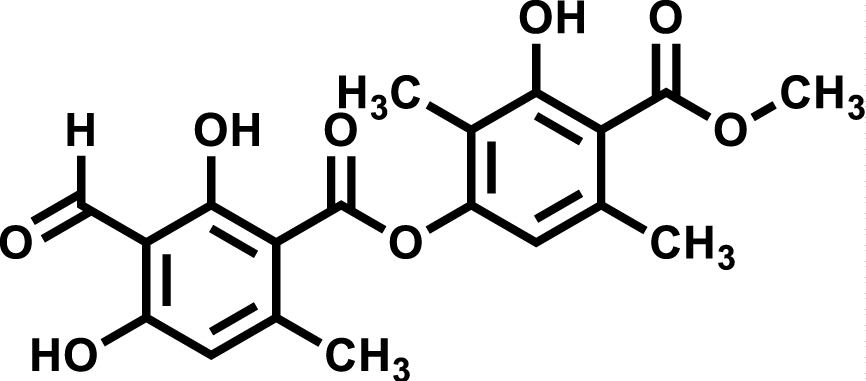
Atranorin, with notable physicochemical properties such as 27 heavy atoms, 6 rotatable bonds, 8 hydrogen bond acceptors, 3 hydrogen bond donors, a molar refractivity of 95.48, and a topological polar surface area of 130 Ų, and showing no violations of Lipinski's rule of five, is well-positioned to interact strongly with cancer-related proteins, demonstrating good druggability [9]. This review delves into the biosynthesis of atranorin and examines its relevance due to its range of biological activities.
Bio-synthesis of atranorin
Atranorin biosynthesis initiates with acetyl-CoA carboxylase catalyzing the conversion of acetyl-CoA to malonyl-CoA via ATP hydrolysis, followed by sequential Claisen decarboxylative condensations with malonyl-CoA to elongate the polyketide chain. The biosynthesis of Atranorin is shown in figure 2.
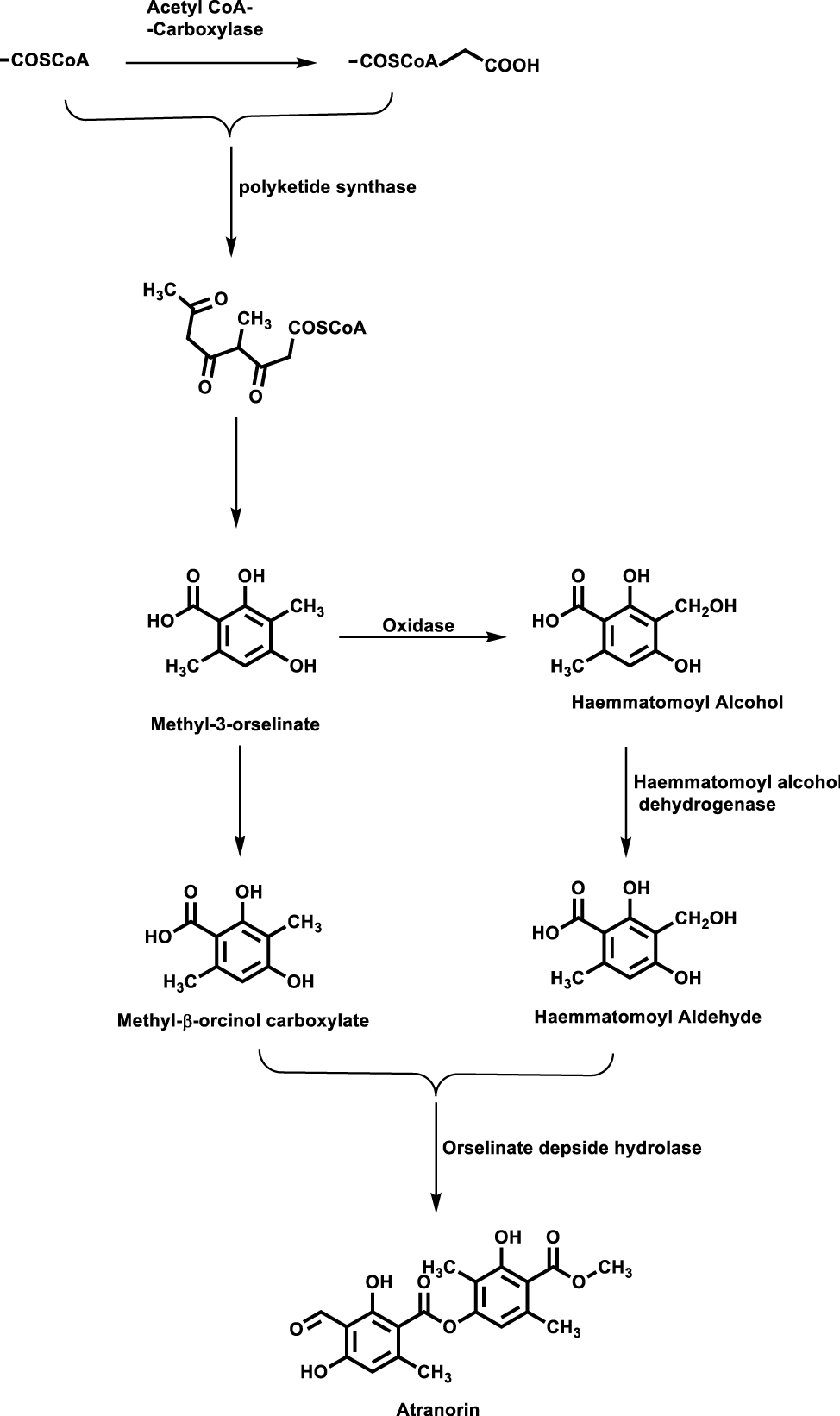
This pathway incorporates acetyl-CoA and three malonyl-CoA molecules to generate the polyketide precursor. Isotopic labeling studies using malonyl-CoA and formic acid elucidated specific integration sites in atranorin. Crucial enzymes in the Polyketide Synthase (PKS) complex include Keto-Synthase (KS), Acyltransferase (AT), and Acyl Carrier Protein (ACP), augmented by optional domains such as Ketoreductase (KR), Dehydratase (DH), Enoylreductase (ER), and Methyltransferases (MT) that diversify the polyketide chain. Post-elongation, Claisen condensation yields phenolic acids with methyl substituents, followed by orcinolic cyclization to form aromatic acids endowed with carboxyl, hydroxyl, and methyl functionalities. Specific modifications, including the integration of labelled formic acid into the β-methyl and aldehyde groups of atranorin, are mediated by intrinsic PKS enzymes, notably MT subunits, which facilitate methylation during chain elongation. Consequently, atranorin is synthesized through the polyketide pathway involving key PKS enzymes, precise cyclization mechanisms, and tailored functional group modifications [15].
Anti-cancer
Phytochemicals with lower binding energies (measured in kcal/mol), usually have higher affinity and are better drug candidates. Docking studies of atranorin have shown it to have more favourable binding sites with various cancer-causing proteins. Molecular docking of atranorin showed binding energies of -7.4 kcal/mol for Bcl-2, -7.2 kcal/mol for Bcl-XL, -7.1 kcal/mol for CCNA 1, -8.8 kcal/mol for CCND 1, -7.1 kcal/mol for CCNE 1, -8.2 kcal/mol for VEGFR 1, and -7.5 kcal/mol for VEGFR 2. Atranorin had the lowest binding energies with Bcl-2 and Bcl-XL, suggesting it can effectively block anti-apoptotic proteins and promote apoptosis. Its strong binding to CCND 1 also indicates a potential for cell cycle arrest at the G1 phase [11]. A. Harikrishnan, et al. [16] investigated the effects of atranorin on breast cancer-related proteins such as AKT (P31749), BCL-2 (P10415), BAX (Q07812), BCL-W (Q92843), and BCL-XL (CAA80661.1). They found that atranorin binds to the allosteric sites of these proteins with an inhibitory concentration of 2.61 μM, 97.8 μM, 105.6 μM, 726.9 μM, and 159.20 μM, respectively. Cytotoxicity studies demonstrated that ATR selectively inhibited triple-negative breast cancer cells (MDA-MB-231) at a concentration of 5.36±0.85 μM and triple-positive breast cancer cells (MCF-7) at a concentration of 7.55 ± 1.2 μM. Interestingly, normal HEK-293 cells, which lack the expression of the specific proteins targeted by ATR, exhibited no significant effects from the treatment. Atranorin does not exhibit cytotoxic activity at 5 μg/mL concentrations. However, at this concentration, it significantly inhibits A549 cell motility, with a 46% reduction in migration and a 33% reduction in invasion. These results demonstrate that atranorin possesses potential inhibitory activity against A549 (lung cancer) cell motility. The expression of c-myc, cyclin-D1, and CD44 is regulated by the β-catenin/TCF4 and LEF1 complex. Atranorin treatment in lung cancer cells significantly decreased the relative expression levels of CD44, cyclin-D1, and c-myc [17]. KITENIN enhances the tumorigenic capabilities of cancers, with Epidermal Growth Factor (EGF) promoting KITENIN-driven activation of AP-1[18]. Atranorin impeded A549 cell motility, in part, by attenuating KITENIN-mediated AP-1 activity, achieved through the modulation of KITENIN and KAI1 expression in lung cancer cells [17].
Anti-inflammatory
Lichen substances exhibit anti-inflammatory activity, and studies have investigated that nearly 70 of these compounds may have potential against inflammation. DellaGreca M, et al. [4], reported that atranorin, derived from the methanol extract of Parmotrema hypoleucinum, exhibited significant anti-inflammatory potential (76%) by reducing Nitric Oxide (NO) levels in Lipopolysaccharide (LPS)-stimulated macrophages. Barrows, et al. [5] isolated both chloroatranorin and atranorin from a hexane extract of Parmelina saccatilobum and tested them in a COX-1 and COX-2 enzyme inhibition assay. The results showed that atranorin inhibited COX-1 in a dose-dependent manner. Additionally, the study suggested that atranorin partially inhibits COX-2, while chloroatranorin partially inhibits COX-1. Kumar and Müller investigated the anti-inflammatory effects of atranorin in both In vitro studies on leukotriene B4 synthesis in polymorphonuclear leukocytes. Atranorin exhibited strong inhibition of LTB4 biosynthesis, achieving an IC50value of 6.0 ± 0.4 µM. For comparison, the reference compounds nordihydroguaiaretic acid and anthralin had IC50values of 0.4 ± 0.21 µM and 37 ± 4.6 µM, respectively [6]. The potential anti-inflammatory effects of atranorin atranorin at doses of 100 and 200 mg/kg were evaluated in a carrageenan-induced paw edema model in Wistar rats. The findings revealed that atranorin significantly reduced paw edema and leukocyte migration, indicating strong anti-inflammatory activity. Additionally, there were no signs of significant acute or subchronic toxicity, nor any cytotoxic effects on other organs [7].
Anti-viral
Lichens have proven to be a promising source of antiviral drugs. Numerous studies have demonstrated the antiviral properties of lichens. Wei, et al. [19] found that atranorin effectively protects SNB-19 cells from Zika Virus (ZIKV) infection. This protective effect is evidenced by a reduction in viral protein expression and a decrease in progeny virus production. Atranorin also mitigates the activation of the Interferon (IFN) signaling pathway and the subsequent inflammatory response induced by ZIKV infection. Results from the time-of-addition assay suggest that atranorin primarily interferes with the viral entry process.
Jacques Le Seyec conducted a phytochemical study of Stereocaulon evolutum, focusing on the isolation of atranorin derivatives. Atranorin, the primary metabolite of this lichen, has been shown to interfere with the lifecycle of Hepatitis C Virus (HCV). Most of these compounds exhibited activity against HCV, with half-maximal inhibitory concentrations ranging from 10 to 70 µM. Specifically, atranorin, which contains an aldehyde group at C-3, was effective in inhibiting only viral entry [20].
Antioxidant
Antioxidant activity of Atranorin (AT) is crucial for understanding its role in systematics and phylogeny. In general, antioxidant activity has primarily been assessed using various chemical In vitro assays, such as free radical scavenging, reducing power, and lipid peroxidation inhibition. The Total Reactive Antioxidant Potential (TRAP) assay is used to measure the antioxidant capacity of samples In vitro [21]. This method relies on the suppression of luminous-enhanced Chemiluminescence (CL), which originates from the thermolysis of 2,2’-Azo-Bis(2-Amidinopropane) dihydrochloride (AAPH) as a source of free radicals [22]. The study noted that atranorin exhibited a strong radical scavenging effect, with IC50values of 39.31 μM [23]. The antioxidant and free radical scavenging capabilities of AT were assessed using the TRAP and TAR assays [24]. These methods are commonly used to determine the non-enzymatic antioxidant potential of isolated substances or mixtures. In the TRAP assay, AT demonstrated dose-dependent antioxidant activity [24]. The TAR analysis revealed that AT significantly scavenges free radicals at a dose of 100 μg/ml [25]. These findings suggest that AT functions as a general antioxidant in systems that generate free radicals, implying its potential to protect against oxidative damage caused by metabolic stress or xenobiotics. Atranorin exhibited peroxyl radical scavenging activity at concentrations ranging from 0.1 to 100 µg/mL in the TRAP/TAR assays [26]. It also displayed significant superoxide dismutase-like activity, highlighting its antioxidant potential against superoxide radicals. However, in a lipid-rich system, atranorin demonstrated a pro-oxidant capacity by increasing TBARS formation induced by the thermolysis of 2,2’-Azo-Bis-(2-Amidinopropane) dihydrochloride (AAPH) incubation. In assays evaluating its antioxidant potential against NO and H2O2, atranorin was found to enhance the production of these species, acting as a pro-oxidant molecule, but only at higher concentrations. Hydrogen peroxide is known to cause cell death through oxidative stress-dependent necrosis and apoptosis, resulting from extensive oxidative damage to DNA, lipids, and proteins. The observed pro-oxidative effects are likely related to the concentration range tested, as lower doses (100-250 µM) have been shown to reduce H2O2/FeCl2 and inhibit lipid peroxidation (LPO), thus protecting against oxidative damage by inhibiting both Reactive Oxygen Species (ROS) and free radicals [28]. These findings are supported by the studies of Papadopoulou, et al. [27] and Kosanić, et al. [29], who also reported significant antioxidant activity of atranorin (0.012-0.017 mg/mL) in the Co(II)/EDTA-induced luminol plateau chemiluminescence assay and demonstrated very strong antioxidant activity in the DPPH, SAS, and reducing power assays, respectively [29].
These antioxidant properties may contribute to its pharmacological effects, including reducing skin damage and modulating the wound healing process [30]. The antioxidant properties of atranorin have been evaluated in various studies. Conducted several free radical inhibition tests, including those for hydroxyl radicals, hydrogen peroxide, superoxide, and nitric oxide. They also performed Total Reactive Antioxidant Potential (TRAP) assays, Total Antioxidant Reactivity (TAR) index measurements, and In vitro lipid peroxidation assays. In the TRAP and TAR assays, atranorin showed a dose-dependent antioxidant capacity, with significant effects at concentrations of 100 µg/mL. While it effectively reduced superoxide radical formation, it also led to a marked increase in hydrogen peroxide production In vitro and heightened lipid peroxidation induced by the free radical-generating compound AAPH.
Antifungal
Mayurika Goel et.al, isolated and identified Atranorin from Parmelia reticulata. Atranorin displayed the highest antifungal activity, inhibiting soilborne pathogenic fungi Sclerotium rolfsii by 100%, 89%, and 67% at concentrations of 250, 125, and 62.5 μg/mL, respectively, with an ED50 value of 39.70 μg/mL [31]. Xiao-Ning, et al. [32] evaluated the antifungal activity of atranorin against Candida albicans using a TLC bioautographic assay. The minimum inhibitory concentration ranged from 2.0 to 15 micrograms, with miconazole serving as the reference drug
Conclusion
In conclusion, although atranorin has shown promising biological activities, research on this lichen-derived metabolite remains relatively limited. To fully realize its potential, further studies are crucial, particularly those evaluating its efficacy against contemporary diseases such as COVID-19, antimicrobial resistance, cancer, and inflammatory disorders. Given the increasing demand for novel therapeutic agents, more in-depth research into atranorin's mechanisms of action, structure-activity relationships, and pharmacological properties is essential. Expanding clinical evaluations could facilitate the development of new drugs with broad-spectrum therapeutic potential.
References
- Mallavadhani UV, Somasekhar T, Sagarika G, Ramakrishna S. Isolation, chemical modification and cytotoxic evaluation of atranorin, the major metabolite of the foliose lichen parmotrema melanothrix. European Chemical Bulletin. 2018;7(4-6):150-155. doi: 10.17628/ecb.2018.7.150-155.
- Somasekhar T, Javadi M, Sistla R, Mallavadhani UV. Synthesis of novel anti-inflammatory Usnic acid-based imidazolium salts. Eur Chem Bull. 2021;10(1):67-72.
- Elkhateeb WA, Somasekhar T, Thomas PW, Wen TC, Daba GM. Mycorrhiza and lichens as two models of fungal symbiosis. Journal of Microbiology, Biotechnology and Food Sciences. 2021;11(3):1-10. doi: 10.15414/jmbfs.4644.
- Mendili M, Khadhri A, Mediouni-Ben Jemâa J, Andolfi A, Tufano I, Aschi-Smiti S, DellaGreca M. Anti-inflammatory potential of compounds isolated from tunisian lichens species. Chem Biodivers. 2022 Aug;19(8):e202200134. doi: 10.1002/cbdv.202200134. Epub 2022 Jul 15. PMID: 35789537.
- Bugni TS, Andjelic CD, Pole AR, Rai P, Ireland CM, Barrows LR. Biologically active components of a papua new guinea analgesic and anti-inflammatory lichen preparation. Fitoterapia. 2009 Jul;80(5):270-3. doi: 10.1016/j.fitote.2009.03.003. Epub 2009 Mar 14. PMID: 19289158; PMCID: PMC2793093.
- Kumar KC, Müller K. Lichen metabolites. 1. Inhibitory action against leukotriene B4 biosynthesis by a non-redox mechanism. J Nat Prod. 1999 Jun;62(6):817-20. doi: 10.1021/np9803777. PMID: 10395494.
- Melo MG, Araújo AA, Serafini MR, Carvalho LF, Bezerra MS, Ramos CS, Bonjardim LR, Albuquerque-Júnior RL, Lima JT, Siqueira RS, Fortes VS. Anti-inflammatory and toxicity studies of Atranorin extracted from cladina kalbii ahti in rodents. Brazilian Journal of Pharmaceutical Sciences. 2011;47:861-872. doi: 10.1590/S1984-82502011000400024.
- Mallavadhani UV, Boddu R, Rathod BB, Reddy Setty P. Stereoselective synthesis of the lichen metabolite,(+) montagnetol and its congeners as antimicrobial agents. Synthetic communications. 2018;48(23):2992-2999. doi: 10.1080/00397911.2018.1519076.
- Harikrishnan A, Veena V, Lakshmi B, Shanmugavalli R, Theres S, Prashantha CN, Shah T, Oshin K, Togam R, Nandi S. Atranorin, an antimicrobial metabolite from lichen Parmotrema rampoddense exhibited in vitro anti-breast cancer activity through interaction with Akt activity. J Biomol Struct Dyn. 2021 Mar;39(4):1248-1258. doi: 10.1080/07391102.2020.1734482. Epub 2020 Mar 9. PMID: 32096436.
- Saha S, Ray R, Paul S. In Vitro screening and in silico docking analysis identifies two novel compound lecanoric acid and Atranorin from Parmotrema tinctorum, exhibiting potent anti-hepatocarcinoma activity. Biointerface Res Appl Chem. 2023;13(6):1-21. doi: 10.33263/BRIAC136.507.
- Hawksworth DL. Supplement to “Chemical and Botanical Guide to Lichen Products”. Chicita F. Culberson. The American Bryological and Lichenological Society (Reprinted from Bryologist). 1970;73:177-377.
- Krishna BR, Gundoju NR, Somasekhar T, Elkhateeb W, Daba G. Biologically active orcinol-based secondary metabolites originated from lichens. Nova Biotechnol Chim. 2022;21(1):1075. doi: 10.36547/nbc.1075.
- Rama Krishna B, Thummuri D, Naidu VGM, Ramakrishna S, Venkata Mallavadhani U. Synthesis of some novel orcinol based coumarin triazole hybrids with capabilities to inhibit RANKL-induced osteoclastogenesis through NF-κB signaling pathway. Bioorg Chem. 2018 Aug;78:94-102. doi: 10.1016/j.bioorg.2018.03.005. Epub 2018 Mar 7. PMID: 29550534.
- Rama Krishna B, Ramakrishna S, Rajendra S, Madhusudana K, Mallavadhani UV. Synthesis of some novel orsellinates and lecanoric acid related depsides as α-glucosidase inhibitors. J Asian Nat Prod Res. 2019 Oct;21(10):1013-1027. doi: 10.1080/10286020.2018.1490274. Epub 2018 Jul 3. PMID: 29968482.
- Pereira EC, da Silva NH, Buril MD, Martins MC, Silva HA, Falcão EP, de Oliveira HP, da Costa MM, Legaz ME, Santiago R, Vicente C. Bioactive compounds from Brazilian lichens and their biotechnological applications. Plant-Derived Bioactives: Production, Properties and Therapeutic Applications. 2020;209-238. doi: 10.1007/978-981-15-1761-7_9.
- Harikrishnan A, Veena V, Lakshmi B, Shanmugavalli R, Theres S, Prashantha CN, Shah T, Oshin K, Togam R, Nandi S. Atranorin, an antimicrobial metabolite from lichen Parmotrema rampoddense exhibited in vitro anti-breast cancer activity through interaction with Akt activity. J Biomol Struct Dyn. 2021 Mar;39(4):1248-1258. doi: 10.1080/07391102.2020.1734482. Epub 2020 Mar 9. PMID: 32096436.
- Zhou R, Yang Y, Park SY, Nguyen TT, Seo YW, Lee KH, Lee JH, Kim KK, Hur JS, Kim H. The lichen secondary metabolite atranorin suppresses lung cancer cell motility and tumorigenesis. Sci Rep. 2017 Aug 15;7(1):8136. doi: 10.1038/s41598-017-08225-1. Erratum in: Sci Rep. 2021 Jun 17;11(1):13132. doi: 10.1038/s41598-021-91474-y. PMID: 28811522; PMCID: PMC5557893.
- Sun EG, Lee KH, Ko YS, Choi HJ, Yang JI, Lee JH, Chung IJ, Paek YW, Kim H, Bae JA, Kim KK. KITENIN functions as a fine regulator of ErbB4 expression level in colorectal cancer via protection of ErbB4 from E3-ligase Nrdp1-mediated degradation. Mol Carcinog. 2017 Mar;56(3):1068-1081. doi: 10.1002/mc.22572. Epub 2016 Oct 26. PMID: 27648936.
- Huang GG, Wang HY, Wang XH, Yang T, Zhang XM, Feng CL, Zhao WM, Tang W. Atranorin inhibits Zika virus infection in human glioblastoma cell line SNB-19 via targeting Zika virus envelope protein. Phytomedicine. 2024 Mar;125:155343. doi: 10.1016/j.phymed.2024.155343. Epub 2024 Jan 8. PMID: 38290230.
- Vu TH, Le Lamer AC, Lalli C, Boustie J, Samson M, Lohézic-Le Dévéhat F, Le Seyec J. Depsides: lichen metabolites active against hepatitis C virus. PLoS One. 2015 Mar 20;10(3):e0120405. doi: 10.1371/journal.pone.0120405. PMID: 25793970; PMCID: PMC4368788.
- Ou B, Hampsch-Woodill M, Prior RL. Development and validation of an improved oxygen radical absorbance capacity assay using fluorescein as the fluorescent probe. J Agric Food Chem. 2001 Oct;49(10):4619-26. doi: 10.1021/jf010586o. PMID: 11599998.
- Gülçin I, Oktay M, Küfrevioğlu OI, Aslan A. Determination of antioxidant activity of lichen Cetraria islandica (L) Ach. J Ethnopharmacol. 2002 Mar;79(3):325-9. doi: 10.1016/s0378-8741(01)00396-8. PMID: 11849836.
- Gaikwad SB, Mapari SV, Sutar RR, Syed M, Khare R, Behera BC. In Vitro and in Silico Studies of Lichen Compounds Atranorin and Salazinic Acid as Potential Antioxidant, Antibacterial and Anticancer Agents. Chem Biodivers. 2023 Dec;20(12):e202301229. doi: 10.1002/cbdv.202301229. Epub 2023 Nov 15. PMID: 37888876.
- Gheldof N, Engeseth NJ. Antioxidant capacity of honeys from various floral sources based on the determination of oxygen radical absorbance capacity and inhibition of in vitro lipoprotein oxidation in human serum samples. J Agric Food Chem. 2002 May 8;50(10):3050-5. doi: 10.1021/jf0114637. PMID: 11982440.
- Lalhminghlui K, Jagetia GC. Evaluation of the free-radical scavenging and antioxidant activities of Chilauni, Schima wallichii Korth in vitro. Future Sci OA. 2018 Jan 4;4(2):FSO272. doi: 10.4155/fsoa-2017-0086. PMID: 29379645; PMCID: PMC5778377.
- White PA, Oliveira RC, Oliveira AP, Serafini MR, Araújo AA, Gelain DP, Moreira JC, Almeida JR, Quintans JS, Quintans-Junior LJ, Santos MR. Antioxidant activity and mechanisms of action of natural compounds isolated from lichens: a systematic review. Molecules. 2014 Sep 12;19(9):14496-527. doi: 10.3390/molecules190914496. PMID: 25221871; PMCID: PMC6271897.
- Papadopoulou P, Tzakou O, Vagias C, Kefalas P, Roussis V. Beta-orcinol metabolites from the lichen Hypotrachyna revoluta. Molecules. 2007 May 12;12(5):997-1005. doi: 10.3390/12050997. PMID: 17873835; PMCID: PMC6149320.
- Ayala A, Muñoz MF, Argüelles S. Lipid peroxidation: production, metabolism, and signaling mechanisms of malondialdehyde and 4-hydroxy-2-nonenal. Oxid Med Cell Longev. 2014;2014:360438. doi: 10.1155/2014/360438. Epub 2014 May 8. PMID: 24999379; PMCID: PMC4066722.
- Kosanić M, Ranković B, Stanojković T, Rančić A, Manojlović N. Cladonia lichens and their major metabolites as possible natural antioxidant, antimicrobial and anticancer agents. LWT-Food Science and Technology. 2014;59(1):518-525. doi: 10.1016/j.lwt.2014.04.047.
- Guo S, Dipietro LA. Factors affecting wound healing. J Dent Res. 2010 Mar;89(3):219-29. doi: 10.1177/0022034509359125. Epub 2010 Feb 5. PMID: 20139336; PMCID: PMC2903966.
- Goel M, Dureja P, Rani A, Uniyal PL, Laatsch H. Isolation, characterization and antifungal activity of major constituents of the Himalayan lichen Parmelia reticulata Tayl. J Agric Food Chem. 2011 Mar 23;59(6):2299-307. doi: 10.1021/jf1049613. Epub 2011 Feb 25. PMID: 21351753.
- Wang XN, Yu WT, Lou HX. Antifungal constituents from the Chinese moss Homalia trichomanoides. Chem Biodivers. 2005 Jan;2(1):139-45. doi: 10.1002/cbdv.200490165. PMID: 17191927.



Content Alerts
SignUp to our
Content alerts.
 This work is licensed under a Creative Commons Attribution 4.0 International License.
