
Medicine Group 2024 October 27;5(10):1403-1410. doi: 10.37871/jbres2029.





 Case Series
Clinical Outcomes of Full-Arch Immediate Fixed Prostheses Supported By a Novel Implant System with Low-Speed Site Preparation: A 5-Years Retrospective Case Series
Enrico Luigi Agliardi1*, Alberto Pitino2, Giulia Moreo1, Bianca D’Orto1 and Davide Romeo1
2Private Practice, Torino, Italy
- Dental implants
- Tilted implants
- Immediate loading
- Tri-oval implant
- Low-speed site preparation
Abstract
Background: The aim of this case series was to evaluate the 5-years clinical and radiographic outcomes of immediate full-arch fixed prosthesis supported by a novel implant system characterized by a low-speed site preparation protocol.
Methods: Six medically compromised patients (3 females and 3 males) were consecutively enrolled and treated. Each patient received a fixed full-arch rehabilitations supported by two axial and two tilted implants. A total of 24 implants (N1 System, Nobel Biocare AB, Göteborg, Sweden) were placed in three mandibles and three maxillae using a low-speed drilling protocol with no irrigation. Prosthetic loading was applied within 2 hours of surgery, while then definitive restorations were placed 4 months later. Patients were scheduled for follow-up every 6 months up to 2 years and then annually. Radiographic evaluation of marginal bone level change was performed on regular intervals.
Results: Between February 2019 and July 2019, six patients received a full-arch fixed prosthesis on four implants. All implants reached a minimum insertion torque of 30 Newton for immediate loading. After 5 years of observation (range 62-67 months), no implants failed and all definitive prostheses were stable and functional, resulting in a cumulative survival rate of 100%. After 5 years, the marginal bone loss was 1.46 ± 0.16 mm for the mandible and 1.85 ± 0.18 mm for the maxilla. Two implants (one axial and 1 tilted) in 1 patient treated in the maxillary arch reported more then 2 mm of marginal bone loss after 5 years.
Conclusions: Within the limitations of this study, the successful medium-term results seem to confirm that immediate fixed full-arch rehabilitation, supported by two anterior axial and two posterior tilted implants, could be an effective and biologically beneficial treatment for complete arch edentulism. The reduced bone remodeling evidenced after 5 years of function confirm the biologically friendly concept behind this novel implant system.
Introduction
Implant dentistry is based on the fundamental principle of osseointegration, defined by Prof. P-I Brånemark as “a direct structural and functional connection between ordered, living bone and the surface of a load-carrying implant” [1]. Prof. Brånemark is considered the founding father of modern implant dentistry thanks to his early observations of bone integration conducted in animal models (rats, rabbits and dogs) in 1960’s [2,3]. In 1977 he published the first clinical study in humans with long-term follow-up, where he proved that titanium screw-type dental implants inserted axially into edentulous jaws were able to support the load of full-arch fixed prostheses [1]. His original protocol has been improved during the last decades thanks to the development of surgical techniques, new implant morphologies and restorative materials. Moreover, the interval between the insertion of the implants and the placement of the restoration has been decreased, allowing patients to receive a fixed prosthesis connected to the implants the same day (immediate loading) [4].
A significant improvement for the treatment of complete edentulism has been proposed by Paulo Malo in 2003 with the introduction of the All-on-4 concept [5,6]. Thanks to this protocol it is possible to treat full arches with an immediately loaded fixed restoration supported only by four implants. Two implants are placed axially at the level of the lateral incisors and two additional implants are inserted in the premolar area with a mesial inclination of 30 to 45 degrees [5,6]. The rational of implant inclination was to avoid critical anatomical structures (the maxillary sinus in the upper jaw and the mental foramen in the mandible), reducing the distal cantilever of the definitive prosthesis and avoiding bone grafting. The advantages are the reduction of treatment times, the discomfort for the patient and the biological and economic costs of the entire treatment [7]. The use of the residual bone of the patient, avoiding bone regeneration procedures, and the reduction of treatment times are key factors responsible for the diffusion of this treatment modality, especially for elderly patients, where poor bone quality and quantity, systemic conditions (osteoporosis) and the chronic use of certain medication (steroids) might reduce implant success rates or even represent a contraindication for bone grafting.
The success of immediately loaded dental implants is strictly related to the development and maintenance of bone integration. The achievement of osseointegration depends on different factors, including implant geometry and micro-design, bone characteristics, surgical drilling protocols and drilling speed [8-10]. In support of this, the review by Pandey [11] demonstrated that the use of low-speed surgical drills, during the implant site preparation, reduces the amount of generated heat and it contributes to avoid bone necrosis at the periphery of the osteotomy. The irrigation of the surgical site, even though reducing the temperature of the bone, is responsible for removing debris, bone chips, blood and connective tissue components, which have been demonstrated to have osteogenic potential [12]. The N1 Implant System (Nobel Biocare AB, Göteborg, Sweden) has been developed to preserve the osteogenic potential of the surgical site by using a low-speed drilling protocol with no irrigation and a new implant design.
The following case series illustrates the clinical outcomes of full-arch immediate fixed prostheses in six medically compromised patients using the N1™ Implant System and the All-on-4 concept after 5 years of observation. Implant and prosthetic survival and success rates including marginal bone loss will be reported.
Materials and Methods
This retrospective case series was conducted following the principles indicated by the Helsinki Declaration for biomedical research involving human subjects, published in 1975 and revised in 2004 [13]. Thee Ethical Committee of the IRCCS San Raffaele Hospital approved the clinical protocol (Reg. N. 190/INT/2021). The day of enrollment subjects were informed of the nature of the study and on possible alternative treatment and they signed a consent form.
All patients received an immediately loaded full-arch implant prosthesis based on the All-on-4 concept [5,6] between February 2019 and July 2019 and they were followed up for at least 5 years. Inclusion criteria were: age greater than 18 years; any race or gender; mentally and physically able to undergo surgical procedures for implant placement as well as restoration phases; motivated to preserve optimal self-administered oral hygiene throughout the follow-up, and to return for periodical maintenance; full edentulism or presence of teeth with compromised prognosis in the short-term; sufficient bone volume for inserting implants of at least 10-mm length and 4-mm diameter in the anterior maxilla or interforaminal region of the mandible. Exclusions criteria were: irradiation to the head or neck region within 12 months before surgery; use of intravenous bisphosphonates; severe bruxism or clenching habits; pregnancy or lactation.
Surgical protocol and immediate loading
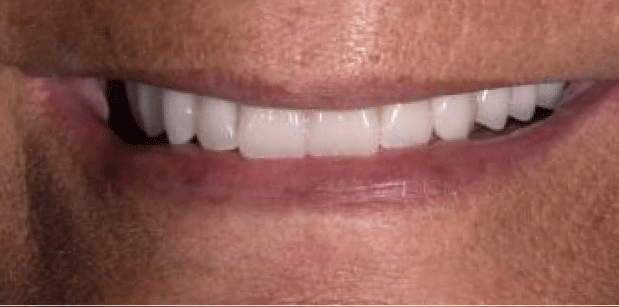
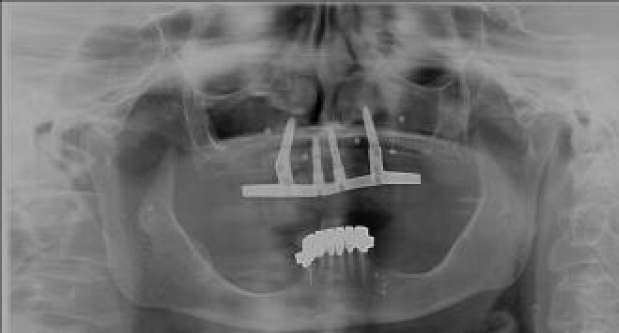
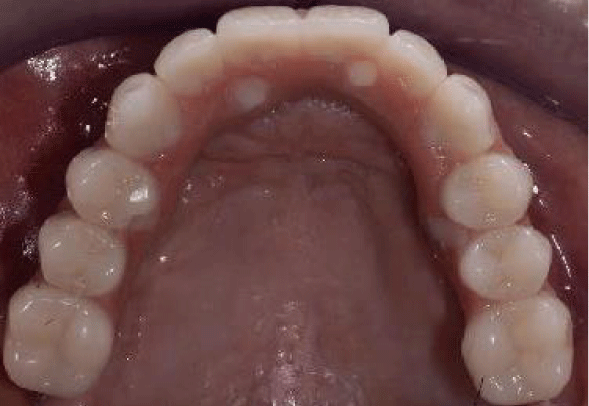
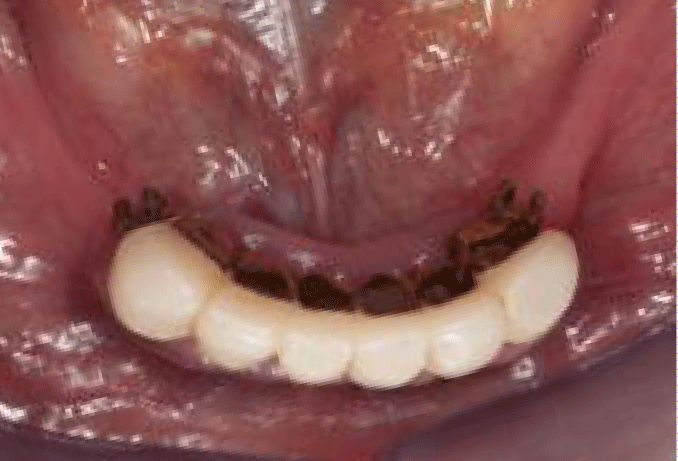
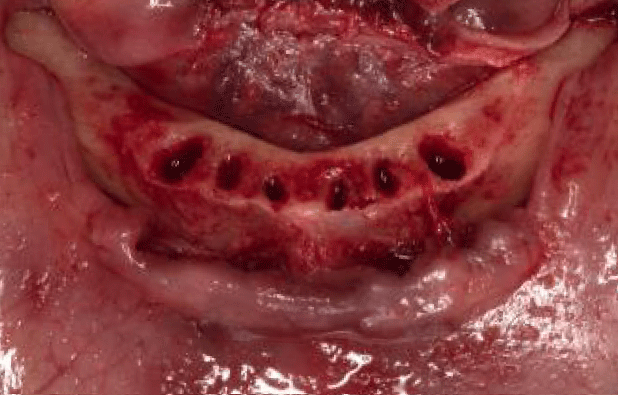
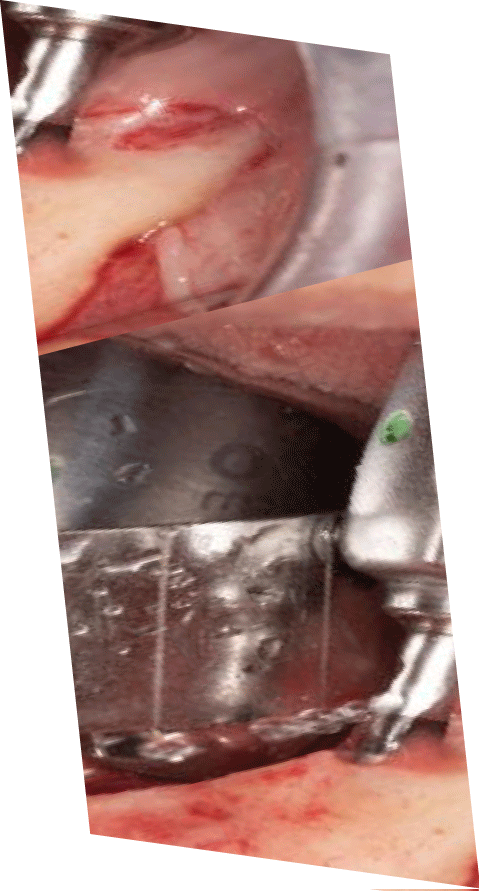
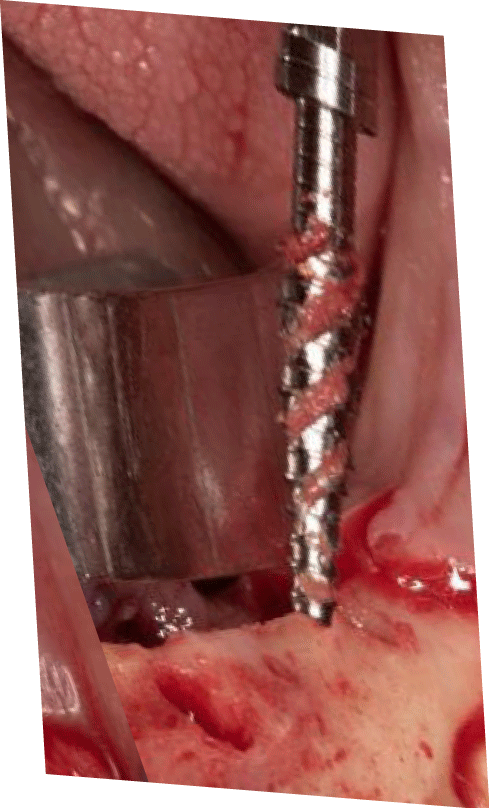
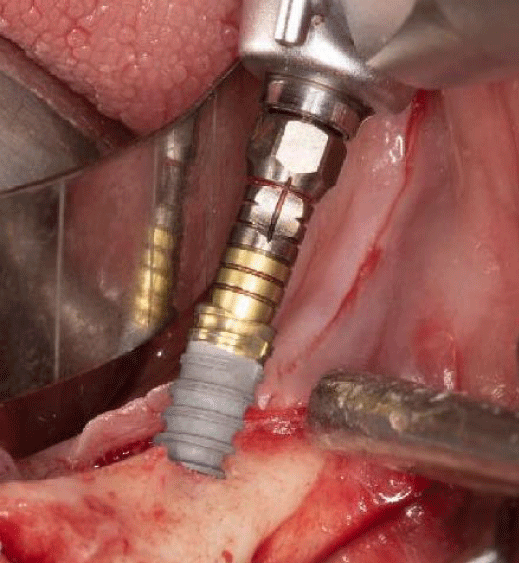
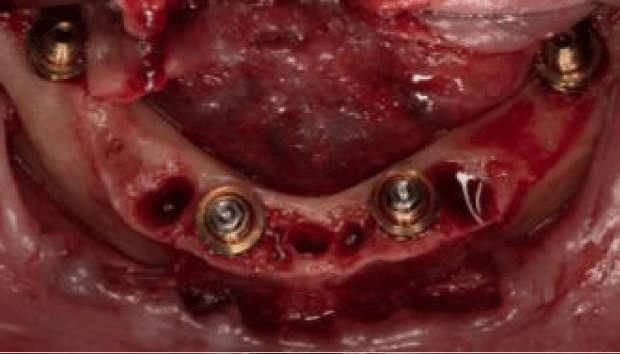
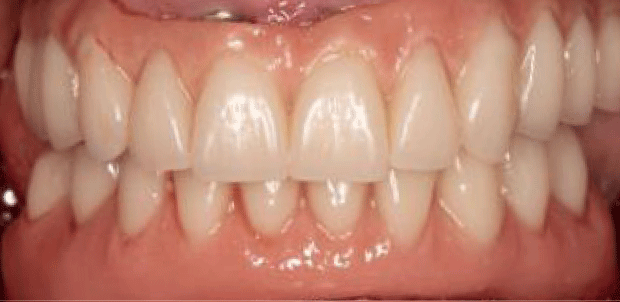
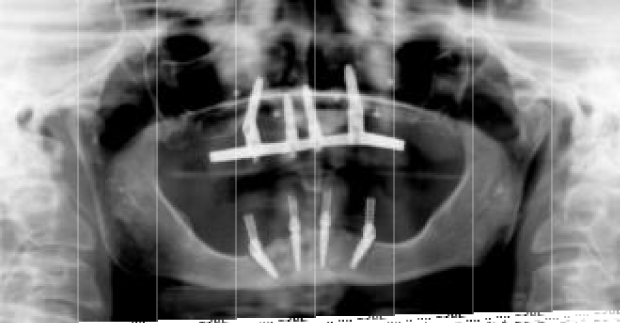
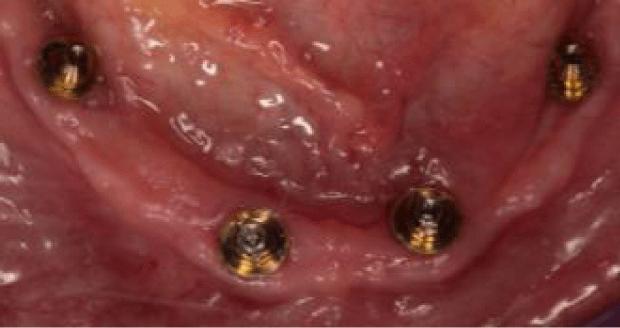
The images of one patient treated in the mandible are used to document the technique (Figures 1-12). After local anesthesia (articaine chlorhydrate 4% and adrenaline 1:100.000), the remaining teeth were gently extracted and the sockets were carefully cleaned. A midcrestal incision and two posterior vertical incisions were made to carefully divide the available keratinized gingiva. Buccal and lingual full thickness flaps were elevated to exposed the underline bone and isolate the mental foramen. The residual ridge was regularized with manual and rotary instruments to create a regular and flat surface for soft tissue adaptation. The osteotomies were created using two sequential drills that were specifically designed for this low-speed drilling implant system (N1™ Implant System, Nobel Biocare). The first drill, called OsseoDirector ™, has side-cutting ability and it was used at < 2000 rpm with saline irrigation to set implant position, angulation and depth of the osteotomies. The second drill, called OsseoShaper ™, was subsequently used at 50 rpm and no irrigation to finalize the osteotomies. Without irrigating the surgical sites, the N1 implants were placed with the handpiece and manual wrench if needed. Each patient received four implants according to the All-on-4 protocol: two axial anterior implants at the level of the lateral incisors and two posterior tilted implants with a medial inclination of 30-45 degrees to avoid the sinus cavities or the mental nerve emergencies. Straight or 17 degrees multi-unit abutments were placed over the anterior implants, while the posterior implants received 30° abutments to correct their inclination. Finally the flaps were closed with a 5-0 suture. Titanium cylinders were screwed over the abutments and an immediate denture was converted chairside into a full acrylic fixed prostheses containing 10 teeth. Distal cantilevers were avoided and light contacts were established in maximum intercuspation. The prosthetic access holes were sealed with PTFE tape and flowable composite. Panoramic and peri-pica radiographs were taken to check implant position and verify the seating of the prosthetic components.
Delivery of the definitive prosthesis
After 4 months needed for implant integration and tissue maturation, patients moved forward with the fabrication of the definitive prosthesis. A CAD/CAM (computer-aided designed/computer aided manufactured) screw retained full-arch restoration with 12 composite teeth (SR Phonares II, Ivoclar Vivadent North America, Amherst, NY) was provided (Procure Implant Bridge/Ti, Nobel Biocare). Patients were included in an individual maintenance program based on compliance and risk factors. At each follow up visit, clinical examination was done and radiographs were taken, if necessary, to monitor peri-implant soft tissue and the integrity of the prosthesis.
Results
A total of 6 patients (3 males and 3 females; mean age 70 years, range 49-81 years) were rehabilitated throughout an immediate fixed full prosthesis supported by four implants. Table 1 presents the main demographic of the patients included in this case series.
| Tables 1: Demography of the patient included in the study. | ||||||
| Subject | Age at surgery (Years) | Gender (M/F) | Arch Treated (Max/Mand) | Smoker (N° cigarettes/Day) | Medical Conditions | History of Periodontal Disease (Y/N) |
| 1 | 72 | M | Mand | N | Diabetes, Cardiovascular disease | N |
| 2 | 49 | M | Max | N | Autoimmune Disease, Long-term use of steroids | Y |
| 3 | 80 | F | Mand | N | Cardiovadscular Disease, Long-term use of steroids | N |
| 4 | 81 | F | Max | Y | Diabetes, osteoporosis being treated with oral biphosphonates | Y |
| 5 | 64 | F | Mand | N | Autoimmune Disease, Long-term use of steroids | Y |
| 6 | 76 | M | Max | N | Autoimmune Disease, Diabetes, osteoporosis being treated with oral biphosphonates | Y |
A total of 24 N1 Implants were placed in three maxillary arches and there mandibles. All implants achieved a minimum insertion torque of 30 Ncm to allow immediate function. Table 2 reports the distribution of all implants according to length, bone density and insertion torque.
| Table 2: Distribution of N1 implants according to bone quality, fixture length and insertion torque. All implants have a diameter of 4 mm. | |||||
| Subject | Arch (Mand/Max) | Implant Site | Bone Quality | Implant Length (mm) | Insertion Torque (Ncm) |
| 1 | Mand | 35 | D2 | 11 | 30 |
| 32 | D2 | 11 | 30 | ||
| 42 | D2 | 11 | > 50 | ||
| 45 | D2 | 11 | > 50 | ||
| 2 | Max | 35 | D2 | 13 | > 50 |
| 32 | D2 | 13 | > 50 | ||
| 42 | D2 | 13 | > 50 | ||
| 45 | D3 | 13 | > 50 | ||
| 3 | Mand | 35 | D3 | 13 | 50 |
| 32 | D2 | 13 | 50 | ||
| 42 | D2 | 13 | > 50 | ||
| 45 | D2 | 13 | > 50 | ||
| 4 | Max | 35 | D3 | 13 | 50 |
| 32 | D3 | 13 | 50 | ||
| 42 | D3 | 13 | > 50 | ||
| 45 | D3 | 13 | > 50 | ||
| 5 | Mand | 35 | D3 | 13 | >50 |
| 32 | D2 | 13 | >50 | ||
| 42 | D2 | 13 | >50 | ||
| 45 | D3 | 13 | >50 | ||
| 6 | Max | 35 | D3 | 13 | 40 |
| 32 | D3 | 13 | 40 | ||
| 42 | D3 | 13 | >50 | ||
| 45 | D3 | 13 | >50 | ||
At the 5-year visit, all implants and prostheses were stable and no failures were recorded, leading to a 100% implant and prosthetic survival rate. Marginal bone loss up to 60 months for the mandible and the maxilla are reported in tables 3,4, respectively. After 5 years, the marginal bone loss was 1.46 ± 0.16 mm for the mandible and 1.85 ± 0.18 mm for the maxilla. Only one axial and one tilted implants in one patient treated in the maxilla reported a marginal bone loss higher than 2 mm up to 60 months.
| Table 3: Marginal bone loss for axial and tilted implants in the mandible. Data are expressed in mm. | ||||||||
| Subjet | Arch (Mand/Max) | Implant Site | Follow up (months) | Bone loss (6 mo) | Bone loss (12 mo) | Bone loss (24 mo) | Bone loss (36 mo) | Bone loss (60 mo) |
| 1 | Mand | 35 | 67 | 0.9 | 1 | 1.1 | 1.5 | 1.8 |
| 32 | 0.7 | 0.8 | 1.1 | 1.2 | 1.5 | |||
| 42 | 0.7 | 0.9 | 1 | 1.3 | 1.5 | |||
| 45 | 0.7 | 0.8 | 0.9 | 1.5 | 1.7 | |||
| 3 | Mand | 35 | 66 | 0.7 | 1 | 1.1 | 1.1 | 1.3 |
| 32 | 0.9 | 0.9 | 1 | 1.2 | 1.5 | |||
| 42 | 0.8 | 1 | 1.1 | 1.3 | 1.5 | |||
| 45 | 0.7 | 0.9 | 1 | 1.2 | 1.5 | |||
| 5 | Mand | 35 | 63 | 0.5 | 0.7 | 0.8 | 1 | 1.2 |
| 32 | 0.5 | 0.6 | 0.7 | 1.1 | 1.3 | |||
| 42 | 0.5 | 0.7 | 0.9 | 1 | 1.4 | |||
| 45 | 0.6 | 0.8 | 0.9 | 1 | 1.3 | |||
| Mean | 0.68 | 0.84 | 0.97 | 1.2 | 1.46 | |||
| St. Dev | 0.13 | 0.12 | 0.12 | 0.16 | 0.16 | |||
Table 4: Marginal bone loss for axial and tilted implants in the maxilla. Data are expressed in mm. |
||||||||
| Subjet | Arch (Mand/Max) | Implant Site | Follow up (months) | Bone loss (6 mo) | Bone loss (12 mo) | Bone loss (24 mo) | Bone loss (36 mo) | Bone loss (60 mo) |
| 2 | Max | 35 | 66 | 0.8 | 1 | 1.3 | 1.4 | 1.7 |
| 32 | 0.8 | 1 | 1.4 | 1.6 | 1.9 | |||
| 42 | 0.9 | 1.1 | 1.4 | 1.7 | 1.9 | |||
| 45 | 0.9 | 1.1 | 1.3 | 1.5 | 1.8 | |||
| 4 | Max | 35 | 65 | 0.9 | 1.2 | 1.4 | 1.8 | 1.9 |
| 32 | 1 | 1.1 | 1.5 | 2 | 2.1 | |||
| 42 | 0.8 | 1.3 | 1.5 | 1.9 | 1.9 | |||
| 45 | 0.9 | 1.4 | 1.8 | 2.3 | 2.3 | |||
| 6 | Max | 35 | 62 | 0.8 | 0.9 | 1.1 | 1.4 | 1.7 |
| 32 | 0.9 | 1 | 1.1 | 1.2 | 1.6 | |||
| 42 | 0.6 | 0.6 | 0.9 | 1.3 | 1.7 | |||
| 45 | 0.9 | 1 | 1.2 | 1.3 | 1.8 | |||
| Mean |
|
|
|
0.85 | 1.06 | 1.32 | 1.61 | 1.85 |
| St. Dev |
|
|
|
0.09 | 0.19 | 0.22 | 0.31 | 0.18 |
Discussion
The purpose of this paper was to report data of a novel implant system for the immediate rehabilitation of edentulous arches with a fixed prosthesis supported by four tilted and two axial implants, after 5 years of function. Implant and prosthetic survival rates and the mean 5-year bone loss are in line with similar reports on this technique.
The main aspect of this case series was the use of this new implant design with its low-speed drilling protocol aimed to preserve the biology of the surgical site. In a series of studies Eriksson and Albrektsson showed that the bone was able to withstand temperatures between 44°C and 47°C for 1 minute without impairing the regeneration process [14,15]. Therefore, 47°C was considered the maximum limit; temperatures above this can result in mineral structure dislocations of hydroxyapatite and microscopic compact bone deformations [14,15]. Among others (cortical thickness, drill sharpness, drill depth, drill design and diameter), drill speed plays a significant role in the production of heat during drilling [16,17]. Traditional drill designs are generally characterized by high rotational velocity (> 800 rpm), in order to obtain an effective cut of the bone tissue [18]. Moreover, the conventional irrigation procedure during osteotomy derives from the need to reduce the heat generated by the high-speed rotation [19]. The small rake angle typical of traditional bone drills contribute to the dispersion of the particles generated during the osteotomy from the implant site [20]. As a consequence of the drill high rotational velocity, thermal and mechanical trauma leads to osteocytes death, triggering bone resorption and undermining implant survival [21,22]. The irrigation, even though reducing the temperature of the bone, is responsible for removing debris (or osseous coagulum) from the implant site, thus eliminating bone chips, blood and connective tissue components, which have been demonstrated to have osteogenic potential [23,24]. Aiming at overcome these limiting conditions during implant site preparation, the new N1 Concept System (Nobel Biocare AB, Göteborg, Sweden) was introduced. In the N1 System protocol, the OsseoShaper (Nobel Biocare AB, Göteborg, Sweden) rotates at low-speed, enlarging the initial osteotomy created by the pilot drill. The low-speed rotation is able to prevent osteocytes necrosis and eliminates the need for irrigation, thus preserving osseous coagulum in the site and consequently contributing to peri-implant bone formation [25,26]. The macro geometry of the N1 implant is also revolutionary. The implant has a ti-oval tapered body, which allows the formation of high strain areas and consequent high primary stability, but at the same time there are zones of low strain where osteogenic potential is preserved, thus leading to secondary stability [27]. This novel concept implant system offers a simplified and easy-to-use implant protocol, reducing the steps needed for implant insertion. Moreover, the reduced bone remodeling evidenced after 5 years of function confirm the biologically friendly concept behind this new system.
The main limitations of this study are the absence of a control group, the retrospective design, the reduced sample size and the medium-term follow up that prevents a generalization of the results.
Conclusion
Within the limitations of this study, the successful medium-term results seem to confirm that immediate fixed full-arch rehabilitation, supported by two anterior axial and two posterior tilted implants, could be an effective and biologically beneficial treatment for complete arch edentulism. Further studies, possibly comparative and prospective, with a larger sample size and longer follow-up are needed to confirm the promising clinical outcomes. Peri-implant parameters (Plaque Index, Bleeding on Probing), patient satisfaction and biological and mechanical complications can also be recorded.
Conflict of Interest
Enrico Luigi Agliardi is currently consultant for Nobel Biocare Services AG. No further conflicts of interest are declared for the remaining authors.
References
- Brånemark PI, Hansson BO, Adell R, Breine U, Lindström J, Hallén O, Ohman A. Osseointegrated implants in the treatment of the edentulous jaw. Experience from a 10-year period. Scand J Plast Reconstr Surg Suppl. 1977;16:1-132. PMID: 356184.
- BRANEMARK PI. Vital microscopy of bone marrow in rabbit. Scand J Clin Lab Invest. 1959;11 Supp 38:1-82. PMID: 13658913.
- Brånemark PI, Adell R, Breine U, Hansson BO, Lindström J, Ohlsson A. Intra-osseous anchorage of dental prostheses. I. Experimental studies. Scand J Plast Reconstr Surg. 1969;3(2):81-100. doi: 10.3109/02844316909036699. PMID: 4924041.
- Del Fabbro M, Pozzi A, Romeo D, de Araújo Nobre M, Agliardi E. Outcomes of Fixed Full-Arch Rehabilitations Supported by Tilted and Axially Placed Implants: A Systematic Review and Meta-Analysis. Int J Oral Maxillofac Implants. 2022 Sep-Oct;37(5):1003-1025. doi: 10.11607/jomi.9710. PMID: 36170316.
- Maló P, Rangert B, Nobre M. "All-on-Four" immediate-function concept with Brånemark System implants for completely edentulous mandibles: a retrospective clinical study. Clin Implant Dent Relat Res. 2003;5 Suppl 1:2-9. doi: 10.1111/j.1708-8208.2003.tb00010.x. PMID: 12691645.
- Maló P, Rangert B, Nobre M. All-on-4 immediate-function concept with Brånemark System implants for completely edentulous maxillae: a 1-year retrospective clinical study. Clin Implant Dent Relat Res. 2005;7 Suppl 1:S88-94. doi: 10.1111/j.1708-8208.2005.tb00080.x. PMID: 16137093.
- Agliardi EL, Pozzi A, Romeo D, Del Fabbro M. Clinical outcomes of full-arch immediate fixed prostheses supported by two axial and two tilted implants: A retrospective cohort study with 12-15 years of follow-up. Clin Oral Implants Res. 2023 Apr;34(4):351-366. doi: 10.1111/clr.14047. Epub 2023 Feb 22. PMID: 36760035.
- Albrektsson T, Brånemark PI, Hansson HA, Lindström J. Osseointegrated titanium implants. Requirements for ensuring a long-lasting, direct bone-to-implant anchorage in man. Acta Orthop Scand. 1981;52(2):155-70. doi: 10.3109/17453678108991776. PMID: 7246093.
- Singhatanadgit W. Biological responses to new advanced surface modifications of endosseous medical implants. Bone and Tissue Regeneration Insights. 2009;2. doi: 10.4137/BTRI.S315.
- Coelho PG, Jimbo R. Osseointegration of metallic devices: current trends based on implant hardware design. Arch Biochem Biophys. 2014 Nov 1;561:99-108. doi: 10.1016/j.abb.2014.06.033. Epub 2014 Jul 8. PMID: 25010447.
- Pandey C, Rokaya D, Bhattarai BP. Contemporary Concepts in Osseointegration of Dental Implants: A Review. Biomed Res Int. 2022 Jun 14;2022:6170452. doi: 10.1155/2022/6170452. PMID: 35747499; PMCID: PMC9213185.
- Bahat O, Yin X, Holst S, Zabalegui I, Berroeta E, Pérez J, Wöhrle P, Sörgel N, Brunski J, Helms JA. An Osteotomy Tool That Preserves Bone Viability: Evaluation in Preclinical and Clinical Settings. J Clin Med. 2022 Apr 30;11(9):2536. doi: 10.3390/jcm11092536. PMID: 35566662; PMCID: PMC9103213.
- Vanpee D, Gillet JB, Dupuis M. Clinical trials in an emergency setting: implications from the fifth version of the Declaration of Helsinki. J Emerg Med. 2004 Jan;26(1):127-31. doi: 10.1016/j.jemermed.2003.04.007. PMID: 14751494.
- Eriksson AR, Albrektsson T. Temperature threshold levels for heat-induced bone tissue injury: a vital-microscopic study in the rabbit. J Prosthet Dent. 1983 Jul;50(1):101-7. doi: 10.1016/0022-3913(83)90174-9. PMID: 6576145.
- Eriksson AR, Albrektsson T, Albrektsson B. Heat caused by drilling cortical bone. Temperature measured in vivo in patients and animals. Acta Orthop Scand. 1984 Dec;55(6):629-31. doi: 10.3109/17453678408992410. PMID: 6524329.
- Sharawy M, Misch CE, Weller N, Tehemar S. Heat generation during implant drilling: the significance of motor speed. J Oral Maxillofac Surg. 2002 Oct;60(10):1160-9. doi: 10.1053/joms.2002.34992. PMID: 12378492.
- Kim SJ, Yoo J, Kim YS, Shin SW. Temperature change in pig rib bone during implant site preparation by low-speed drilling. J Appl Oral Sci. 2010 Sep-Oct;18(5):522-7. doi: 10.1590/s1678-77572010000500016. PMID: 21085811; PMCID: PMC4246386.
- Abouzgia MB, James DF. Measurements of shaft speed while drilling through bone. J Oral Maxillofac Surg. 1996 Mar;54(3):379. doi: 10.1016/s0278-2391(96)90786-7. PMID: 8600253.
- Aghvami M, Brunski JB, Serdar Tulu U, Chen CH, Helms JA. A Thermal and Biological Analysis of Bone Drilling. J Biomech Eng. 2018 Oct 1;140(10):1010101–8. doi: 10.1115/1.4040312. PMID: 30029243; PMCID: PMC6059311.
- Chen CH, Coyac BR, Arioka M, Leahy B, Tulu US, Aghvami M, Holst S, Hoffmann W, Quarry A, Bahat O, Salmon B, Brunski JB, Helms JA. A Novel Osteotomy Preparation Technique to Preserve Implant Site Viability and Enhance Osteogenesis. J Clin Med. 2019 Feb 1;8(2):170. doi: 10.3390/jcm8020170. PMID: 30717291; PMCID: PMC6406409.
- Chen CH, Pei X, Tulu US, Aghvami M, Chen CT, Gaudillière D, Arioka M, Maghazeh Moghim M, Bahat O, Kolinski M, Crosby TR, Felderhoff A, Brunski JB, Helms JA. A Comparative Assessment of Implant Site Viability in Humans and Rats. J Dent Res. 2018 Apr;97(4):451-459. doi: 10.1177/0022034517742631. Epub 2017 Dec 4. PMID: 29202640; PMCID: PMC5863872.
- Coyac BR, Salvi G, Leahy B, Li Z, Salmon B, Hoffmann W, Helms JA. A novel system exploits bone debris for implant osseointegration. J Periodontol. 2021 May;92(5):716-726. doi: 10.1002/JPER.20-0099. Epub 2020 Sep 10. PMID: 32829495.
- Khan SN, Cammisa FP Jr, Sandhu HS, Diwan AD, Girardi FP, Lane JM. The biology of bone grafting. J Am Acad Orthop Surg. 2005 Jan-Feb;13(1):77-86. PMID: 15712985.
- Bahat O, Yin X, Holst S, Zabalegui I, Berroeta E, Pérez J, Wöhrle P, Sörgel N, Brunski J, Helms JA. An Osteotomy Tool That Preserves Bone Viability: Evaluation in Preclinical and Clinical Settings. J Clin Med. 2022 Apr 30;11(9):2536. doi: 10.3390/jcm11092536. PMID: 35566662; PMCID: PMC9103213.
- Meljon A, Geisendorf M. Kamber S, Fuchs F. Irastorza-Landa, A. Evaluation of heat generated by a new site preparation using low-speed tools without irrigation. Clin Oral Impl Res. 2021;32:111.
- Fabbri G, Staas T, Urban I. A Retrospective Observational Study Assessing the Clinical Outcomes of a Novel Implant System with Low-Speed Site Preparation Protocol and Tri-Oval Implant Geometry. J Clin Med. 2022 Aug 18;11(16):4859. doi: 10.3390/jcm11164859. PMID: 36013098; PMCID: PMC9410172.
- Yin X, Li J, Hoffmann W, Gasser A, Brunski JB, Helms JA. Mechanical and Biological Advantages of a Tri-Oval Implant Design. J Clin Med. 2019 Mar 28;8(4):427. doi: 10.3390/jcm8040427. PMID: 30925746; PMCID: PMC6517945.




Content Alerts
SignUp to our
Content alerts.
 This work is licensed under a Creative Commons Attribution 4.0 International License.
