
Medicine Group 2024 October 27;5(10):1379-1387. doi: 10.37871/jbres2026.





 Research Article
Rapid HbA1c Reduction May Reduce Diabetes-Related Complications in Patients with Severe Hyperglycemia
Melat Gebrehiwet Netserab, Muna Ahmed Mohammed Alamin, Lesse Redie Menghstab and Tedros Gebrezgiabhier Gebreyesus*
2School of Medicine, College of Medicine, National Yang Ming Chiao Tung University, Taipei, Taiwan
Abstract
Aims: To investigate whether a rapid reduction in HbA1c is more effective for reducing diabetes-related complications and mortality than a gradual approach in patients with severe hyperglycemia.
Methods: This retrospective cohort study included 577 patients with type 2 diabetes and an initial HbA1c level ≥ 9.0%, recruited from the Diabetes Shared Care Program at the Taipei Veterans General Hospital from January 2004 to December 2015 and followed up until December 2019. Participants were divided into two groups based on the rate of HbA1c reduction: rapid (HbA1c level < 9.4% by month 3) and slow (HbA1c level ≥ 9.4% by month 3). Primary outcomes were nephropathy, retinopathy, and all-cause mortality. Data were analyzed using Cox proportional hazards models, adjusted for potential confounders.
Results: The rapid-reduction group exhibited significantly lower mean HbA1c levels over five years and risk of all-cause mortality (Hazard Ratio [HR]: 1.371; 95% CI: 1.026-1.833; p = 0.033) than the slow-reduction group. In the subgroup without substantial baseline diabetes-related complications, the rapid-reduction group had lower risks of urine albumin/creatinine ratio ≥ 300 mg/g (HR: 1.441; 95% CI: 1.011-2.055; p = 0.043), any retinopathy (HR: 1.497; 95% CI: 1.079-2.076; p = 0.016), and all-cause mortality (HR: 1.456; 95% CI: 1.034-2.050; p = 0.031) than the slow-reduction group.
Conclusion: Rapid reduction of HbA1c levels significantly reduces risk of all-cause mortality in patients with severe hyperglycemia. It also reduces risk of nephropathy and retinopathy in patients without substantial diabetes-related complications at baseline.
Introduction
The severity of chronic hyperglycemia is directly associated with the risk of complications such as retinopathy, nephropathy, neuropathy, and stroke and can significantly impact the quality of life and overall life expectancy of patients [1-3]. Strict control of glucose levels in the early stages of the condition yields health benefits even years later [4-8]. Timely and stringent glucose control may reduce the risk of hyperglycemia and its associated complications. However, the Action to Control Cardiovascular Risk in Diabetes (ACCORD) trial revealed no benefit in terms of cardiovascular disease outcomes from intensive glycemic control, and the intensive treatment arm was terminated early because of an increased mortality rate [9,10]. Similarly, in the Veterans Affairs Diabetes Trial (VADT), an aggressive glucose-lowering strategy did not significantly reduce the cardiovascular disease risk but resulted in a higher incidence of hypoglycemic events, potentially contributing to adverse outcomes [11].
Balancing the benefits of a rapid HbA1c reduction with the potential risk of hypoglycemia is essential for overall glycemic control. Research has suggested that intermittent hypoglycemia may contribute to an increased risk of complications by elevating oxidative stress and activating the sympathoadrenal system, exacerbating the stress on organs already affected by chronic inflammation [12-14]. Furthermore, a rapid decrease in the HbA1c level in patients with severe hyperglycemia may increase the variability of their blood glucose levels. Studies have indicated that both the mean HbA1c level and the variability therein influence the risk of complications in patients with type 2 diabetes [15,16]. Systematic reviews and meta-analyses have revealed a positive association between HbA1c variability and all-cause mortality, cardiovascular disease, renal disease, and peripheral neuropathy [17,18].
Concerns have been raised about potential adverse outcomes of rapid reduction of the HbA1c level in patients with severe hyperglycemia. Physicians often face a dilemma when deciding whether to aggressively lower a patient’s blood sugar level or adopt a more gradual approach. We aimed to address this knowledge gap by conducting a retrospective cohort study in which we compared the effects of a rapid or gradual reduction in the HbA1c level on complications in patients with type 2 diabetes and severe hyperglycemia. We believe that this analysis provides valuable insights for optimizing the management strategy for this challenging patient population.
Research Design and Methods
Participant selection
We recruited patients at the Taipei Veterans General Hospital in Taiwan who participated in the Diabetes Shared Care Program and provided written informed consent from January 2004 to December 2015. Patients were followed up regularly from January 2004 to December 2019. The study protocol was approved by the institutional review board of Taipei Veterans General Hospital.
We excluded patients with an initial HbA1c level < 9.0% to ensure a focus on those with severe hyperglycemia. Additionally, individuals with a follow-up duration of less than five years or myocardial infarction, stroke, cardiovascular diseases, or malignancy at baseline were excluded.
Baseline and follow-up examinations
Diabetes case managers collected baseline data on the patients’ demographic characteristics, diabetes duration, prescribed medication, and smoking status. Height, body weight, and blood pressure were assessed during physical examinations. Fasting serum samples were collected via venipuncture to measure patients’ fasting blood glucose, HbA1c, creatinine, total cholesterol, HDL cholesterol, LDL cholesterol, and triglyceride levels. Finally, urine albumin-to-Creatinine Ratio (UACR) was determined and funduscopic examinations were performed.
All patients were monitored according to a set protocol at our clinics as a part of the national Diabetes Shared Care Program. Typically, fasting blood glucose and HbA1c levels were assessed every three months. Measurements of serum creatinine; total, HDL, and LDL cholesterol; triglyceride levels; and UACR, together with eye funduscopic examinations, were conducted annually. Our study outcomes included funduscopic characteristics, UACR, and serum creatinine level, which were tracked until either the patient’s death or 31 December 2019. Other parameters were evaluated over a span of five years or until the patient’s death.
Assessment of glycemic control
Patients’ HbA1c levels were measured at baseline and every three months thereafter. For this study, the HbA1c level at the initiation of blood sugar reduction, specifically that measured at about month 3, was chosen as the reference value. Patients were categorized into groups based on their HbA1c reduction speed, using the median HbA1c level of 9.4% as the overall threshold and 9.2% for patients without substantial diabetes-related complications. This categorization was performed to explore the relationship between the rate of glycemic control and the occurrence of diabetes-related complications among patients with severe hyperglycemia.
Examinations and measurements
We measured HbA1c levels using the TOSOH Automated Glycohemoglobin Analyzer HLC 723 G7/G8 (Tosoh, Tokyo, Japan) via high-performance liquid chromatography performed from 1 January 2004 to 30 September 2018. From 1 October 2018 to 30 September 2021, HbA1c levels were measured via electrophoresis by using the Sebia CAPILLARYS 3 TERA system (Sebia, Lisses, France). The estimated glomerular filtration rate was calculated using the four-variable equation from the modification of diet in renal disease (MDRD) study. Early morning spot urine samples were used to determine urinary albumin excretion based on the UACR. Retinal assessments involved color photographs of the patients’ retinas, including macula- and disc-centered views, taken at a 45° angle with a fundus camera after pharmacological mydriasis. Trained physicians evaluated the fundus photographs for retinopathy.
Assessment of outcomes
We assessed six primary clinical outcomes: nephropathy (defined as a UACR > 300 mg/g and a doubling of serum creatinine), retinopathy (any retinopathy and advanced retinopathy), and mortality (all-cause and cardiovascular disease-related mortality). Abnormal retinal findings led to a referral to an ophthalmologist for further evaluation. Advanced retinopathy was defined as the presence of proliferative retinopathy or a history of laser photocoagulation or vitrectomy. Mortality data, including the date and cause of death, were obtained from the Department of Health, Executive Yuan, ROC (Taiwan), with the analysis period extending until 31 December 2019.
Statistical analysis
Statistical analyses were conducted using IBM SPSS version 29.0 for Mac (IBM, USA). Continuous variables are presented as means ± standard deviations or medians with Interquartile Ranges (IQRs), whereas categorical variables are expressed as frequencies and percentages. Participants were stratified into two groups based on their HbA1c level at the second measurement (at about month 3). Triglyceride levels and UACRs are reported as medians with IQRs and were analyzed using nonparametric tests. Baseline characteristics were compared using Student’s t-test for continuous variables and Pearson’s chi-square test for categorical variables. Cox proportional hazards models were used to evaluate the impact of the HbA1c reduction rate on clinical outcomes, calculating the Hazard Ratio (HR) for each variable. Multivariable Cox regression models were adjusted for predefined variables to account for potential confounders.
Results
Patient recruitment
Initially, 4450 patients with type 2 diabetes participating in the Diabetes Shared Care Program from January 2004 to December 2015 were eligible for the study. After applying the exclusion criteria, 577 patients with an initial HbA1c level ≥ 9.0% were eligible for the primary analysis. Of these, patients with a UACR ≥ 300 mg/g, serum creatinine level ≥ 1.50 mg/dL, or greater than moderate retinopathy at baseline were excluded from the subgroup analysis of patients without substantial diabetic complications at baseline, yielding 452 patients for this analysis (Supplementary Figure 1).
Characteristics of the study sample
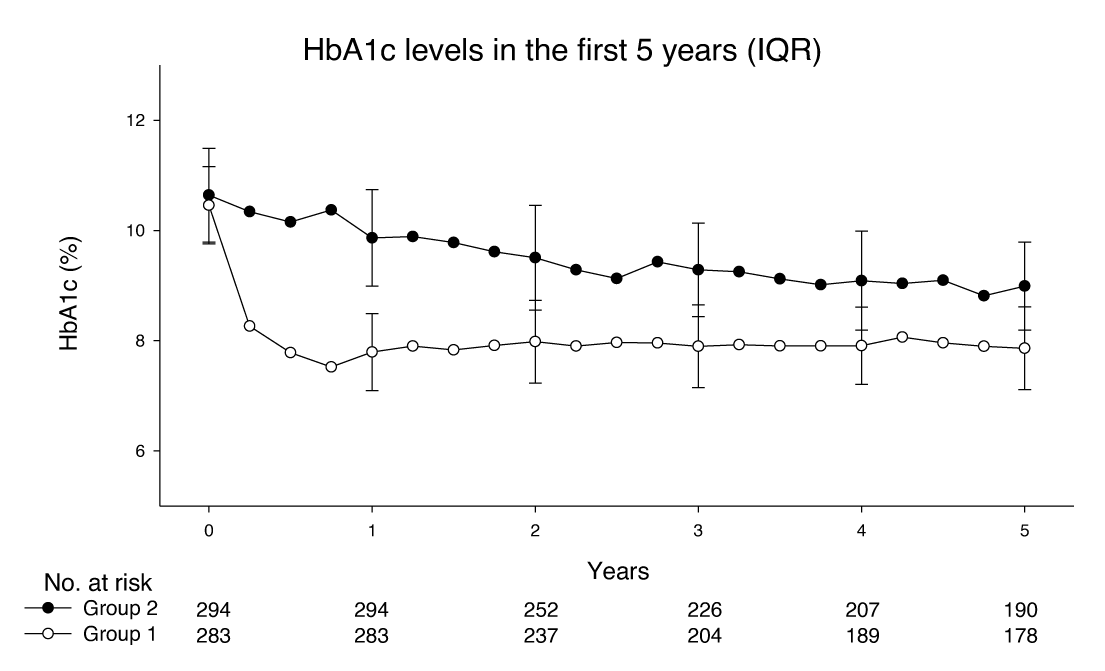
Based on the speed of HbA1c reduction, the study sample was divided into two groups: the rapid-reduction group (HbA1c level < 9.4% at the second examination), which comprised 283 patients, and the slow-reduction group (HbA1c level ≥ 9.4% at the second examination), comprising 294 patients (Table 1). The rapid-reduction group had a lower proportion of women and lower initial HbA1c levels, fasting plasma glucose levels, and UACRs. This group maintained a decrease in HbA1c levels over the first five years and achieved significantly lower mean HbA1c levels over the five-year follow-up period than the slow-reduction group (Figure 1).
| Table 1: Characteristics of patients stratified by rate of HbA1c reduction in the first three months. | |||
| Rapid reduction | Slow reduction | p | |
| Number of participants | 283 | 294 | |
| Age (y) | 59.75 ± 15.47 | 60.36 ± 14.536 | 0.672 |
| Men/Women | 154/129 | 134/160 | 0.037 |
| Body weight (kg) | 68.91 ± 13.77 | 68.79 ± 14.46 | 0.923 |
| BMI (kg/m2) | 26.17 ± 3.97 | 26.8 ± 4.55 | 0.073 |
| Systolic BP (mmHg) | 131.3 ± 11.6 | 132.8 ± 11.2 | 0.530 |
| Initial HbA1c (%) | 10.32 ± 1.47 | 10.78 ± 1.38 | < 0.001 |
| Mean HbA1c at 5 years (%) | 8.24 ± 0.85 | 9.86 ± 1.23 | < 0.001 |
| SD of HbA1c (%) | 1.21 ± 0.77 | 1.13 ± 0.59 | 0.171 |
| Fasting blood glucose (mg/dL) | 193.1 ± 65.3 | 208.3 ± 68.2 | 0.007 |
| Total cholesterol (mg/dL) | 189.8 ± 43.8 | 193.9 ± 43.7 | 0.262 |
| LDL cholesterol (mg/dL) | 115.6 ± 37.1 | 116.5 ± 38.2 | 0.782 |
| Serum triglycerides (mg/dL) | 129 (89–209) | 147 (97–220) | 0.090 |
| Serum creatinine (mg/dL) | 0.995 ± 0.639 | 0.975 ± 0.485 | 0.665 |
| eGFR (mL/min/1.73 m2) | 94.85 ± 35.86 | 94.55 ± 39.74 | 0.962 |
| UACR (mg/g) | 21.0 (9.0–115.5) | 67.0 (15.8-382.2) | < 0.001 |
| Slow and rapid HbA1c reduction rates were defined as HbA1c levels ≥ 9.4% and < 9.4% at the second examination (about month 3), respectively. Data are presented as mean ± SD or median (interquartile range), as indicated. Student’s t-test or the Mann–Whitney U test was used for continuous variables, as appropriate, and Pearson’s χ2 test was used for categorical variables. Abbreviations: BMI: Body Mass Index; BP: Blood Pressure; eGFR: estimated Glomerular Filtration Rate; LDL: Low-Density Lipoprotein; SD: Standard Deviation; UACR: Urinary Albumin-to-Creatinine Ratio | |||
Association between HbA1c reduction rate and diabetes-related complications
The slow-reduction group exhibited a higher risk of having a UACR ≥ 300 mg/g than the rapid-reduction group, although this difference was not statistically significant after adjustment (adjusted HR: 1.347; 95% CI: 0.950-1.911; p = 0.095; table 2). The slow-reduction group did have a significantly higher risk of all-cause mortality (adjusted HR: 1.371; 95% CI: 1.026-1.833; p = 0.033), however. No significant differences were observed in the risk of serum creatinine doubling, any retinopathy, advanced retinopathy, or cardiovascular disease-related mortality between the two groups.
| Table 2: Hazard ratios for diabetic complications and mortality according to the rate of HbA1c reduction in the first three months. | |||||
| Events (%) | Crude HR (95% CI) | P | Adjusted HR (95% CI)* | p | |
| Nephropathy | |||||
| UACR ≥ 300 mg/g | 82/56 (39.8/28.3) | 1.545 (1.098-2.176) | 0.013 | 1.347 (0.950-1.911) | 0.095 |
| Creatinine doubling | 21/20 (10.8/10.4) | 1.087 (0.589-2.005) | 0.791 | 0.918 (0.488-1.729) | 0.792 |
| Retinopathy | |||||
| Any retinopathy | 100/78 (34.1/27.6) | 1.255 (0.933-1.688) | 0.133 | 1.211 (0.894-1.639) | 0.217 |
| Advanced retinopathy | 13/16 (4.44/5.65) | 0.790 (0.380-1.642) | 0.527 | 0.712 (0.336-1.510) | 0.376 |
| Mortality | |||||
| All-cause mortality | 109/85 (37.2/30.0) | 1.324 (0.997-1.758) | 0.053 | 1.371 (1.026-1.833) | 0.033 |
| CVD-related mortality | 25/19 (9.33/6.71) | 1.350 (0.743-2.451) | 0.325 | 1.317 (0.713-2.431) | 0.380 |
| Slow and rapid HbA1c reduction rates were defined as HbA1c levels ≥ 9.4% and < 9.4% at the second examination (about month 3), respectively. Hazard ratios were calculated using Cox proportional hazards models. *Adjusted for age, sex, systolic blood pressure, BMI, total cholesterol, LDL cholesterol, and triglycerides. Abbreviations: CI: Confidence Interval; CVD: Cardiovascular Disease; HR: Hazard Ratio; UACR: Urinary Albumin-to-Creatinine Ratio | |||||
Subgroup analysis of patients without substantial diabetic complications
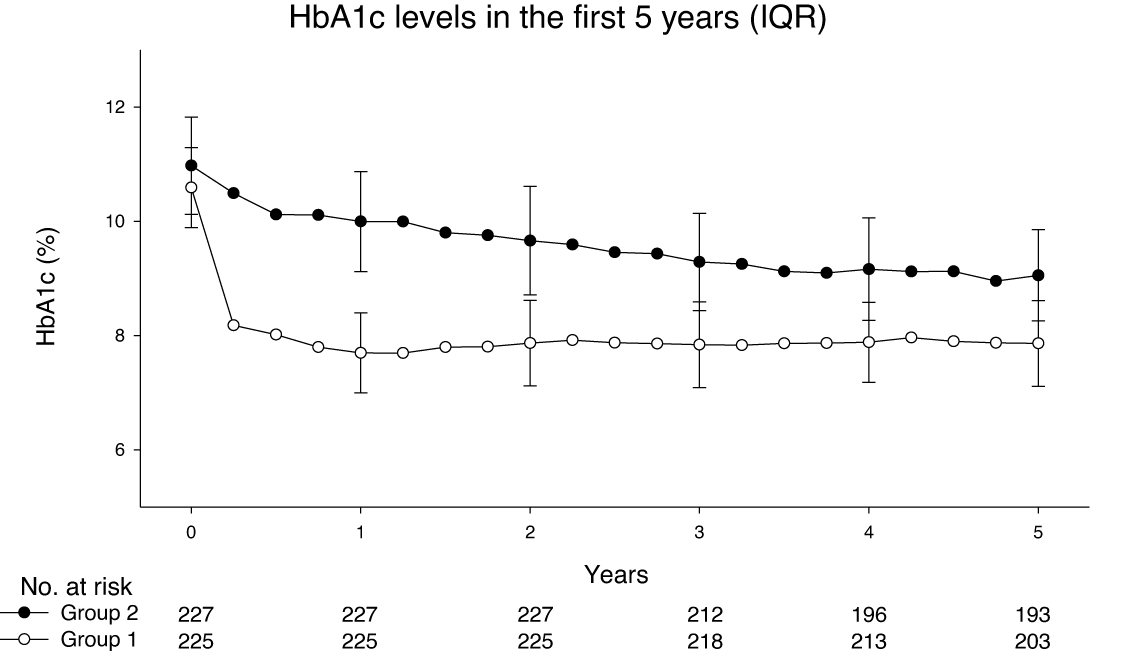
The subgroup of 452 patients without substantial diabetic complications at baseline were also divided into two groups based on HbA1c reduction rate: the rapid-reduction group (HbA1c level < 9.2% at the second examination) comprised 227 patients, and the slow-reduction group (HbA1c level ≥ 9.2% at the second examination) comprised 225 patients (Table 3). Overall, the rapid-reduction group had a lower proportion of women (44.9% vs. 55.6%; p = 0.024), lower UACR (18.3 [8.8-90.0] vs. 67.9 [14.6-234.5] mg/g; p < 0.001), lower initial HbA1c level (10.20% ± 1.26% vs. 10.97% ± 1.52%; p = 0.001), and lower mean HbA1c level over five years (8.31% ± 0.66% vs. 10.33% ± 0.95%; p < 0.001) than the slow-reduction group (Figure 2).
| Table 3: Characteristics of patients without substantial diabetic complications stratified by the rate of HbA1c reduction in the first three months. | |||
| Rapid reduction | Slow reduction | p | |
| Number of participants | 227 | 225 | |
| Age (y) | 59.8 ± 14.51 | 61.2 ± 14.4 | 0.300 |
| Men/Women | 125/102 | 100/125 | 0.024 |
| Body weight (kg) | 69.6 ± 13.8 | 68.8 ± 14.1 | 0.549 |
| BMI (kg/m2) | 26.39 ± 3.88 | 26.96 ± 4.48 | 0.450 |
| Systolic BP (mmHg) | 131.7 ± 10.8 | 133.0 ± 11.2 | 0.191 |
| Initial HbA1c (%) | 10.20 ± 1.26 | 10.97 ± 1.52 | 0.001 |
| Mean HbA1c at 5 years (%) | 8.31 ± 0.66 | 10.33 ± 0.95 | < 0.001 |
| SD of HbA1c (%) | 1.12 ± 0.57 | 1.20 ± 0.53 | 0.097 |
| Fasting blood glucose (mg/dL) | 198.0 ± 65.1 | 209.8 ± 67.6 | 0.064 |
| Total cholesterol (mg/dL) | 191.2 ± 42.9 | 193.4 ± 43.9 | 0.599 |
| LDL cholesterol (mg/dL) | 116.3 ± 38.3 | 115.9 ± 37.7 | 0.894 |
| Serum triglycerides (mg/dL) | 132 (95–212) | 146 (97–219) | 0.839 |
| Serum creatinine (mg/dL) | 1.013 ± 0.665 | 0.971 ± 0.475 | 0.436 |
| eGFR (mL/min/1.73 m2) | 90.95 ± 33.03 | 92.47 ± 43.38 | 0.798 |
| UACR (mg/g) | 18.3 (8.8-90.0) | 67.9 (14.6-234.5) | < 0.001 |
| Slow and rapid HbA1c reduction rates were defined as HbA1c levels ≥ 9.2% and < 9.4% at the second examination (about month 3), respectively. Data are presented as mean ± SD or median (interquartile range), as indicated. Student’s t-test or the Mann–Whitney U test was used for continuous variables, as appropriate, and Pearson’s χ2 test was used for categorical variables. Abbreviations: BMI: Body Mass Index; BP: Blood Pressure; eGFR: estimated Glomerular Filtration Rate; LDL: Low-Density Lipoprotein; SD: Standard Deviation; UACR: Urinary Albumin-to-Creatinine Ratio | |||
We also analyzed the associations between the HbA1c reduction rate and diabetes-related complications in this subgroup (Table 4). The slow-reduction group had a higher risk of having a UACR ≥ 300 mg/g, of all-cause mortality, and of any retinopathy than the rapid-reduction group, with adjusted HRs of 1.441 (95% CI: 1.011-2.055; p = 0.043), 1.456 (95% CI: 1.034-2.050; p = 0.031), and 1.497 (95% CI: 1.079-2.076; p = 0.016), respectively. The risk of serum creatinine doubling, advanced retinopathy, and cardiovascular disease-related mortality did not differ significantly between the two groups.
| Table 4: Hazard ratios for diabetic complications and mortality according to the rate of HbA1c reduction in the first three months in patients without substantial diabetic complications. | |||||
| Events (%) | Crude HR (95% CI) | P | Adjusted HR (95% CI)* | p | |
| Nephropathy | |||||
| UACR ≥ 300 mg/g | 81/55 (36.0/24.2) | 1.638 (1.160-2.312) | 0.005 | 1.441 (1.011-2.055) | 0.043 |
| Creatinine doubling | 22/19 (9.78/8.37) | 1.181 (0.639-2.183) | 0.595 | 0.913 (0.484-1.723) | 0.779 |
| Retinopathy | |||||
| Any retinopathy | 93/61 (41.3/26.9) | 1.591 (1.152-2.199) | 0.005 | 1.497 (1.079-2.076) | 0.016 |
| Advanced retinopathy | 17/11 (7.56/4.85) | 1.585 (0.742-3.383) | 0.234 | 1.369 (0.630-2.974) | 0.427 |
| Mortality | |||||
| All-cause mortality | 87/56 (38.7/24.7) | 1.590 (1.136-2.225) | 0.007 | 1.456 (1.034-2.050) | 0.031 |
| CVD-related mortality | 17/16 (7.56/7.05) | 1.085 (0.548-2.148) | 0.815 | 0.972 (0.484-1.950) | 0.936 |
| Slow and rapid HbA1c reduction rates were defined as HbA1c levels ≥ 9.2% and < 9.2% at the second examination (about month 3), respectively. Hazard ratios were calculated using Cox proportional hazards models. *Adjusted for age, sex, systolic blood pressure, BMI, total cholesterol, LDL cholesterol, and triglycerides. Abbreviations: CI: Confidence Interval; CVD: Cardiovascular Disease; HR: Hazard Ratio; UACR: Urinary Albumin-to-Creatinine Ratio | |||||
Discussion
To our knowledge, this is the first study to investigate whether a rapid reduction in HbA1c level is beneficial in terms of reducing complications in patients with severe hyperglycemia compared to a gradual approach. Our findings show that a rapid reduction significantly reduces the risk of all-cause mortality in such patients. Further, in patients without substantial diabetes-related complications at baseline, a rapid reduction also significantly reduces the risk of a UACR ≥ 300 mg/g and any retinopathy.
The benefits of rapid glycemic control may involve several mechanisms. Rapid glycemic control reduces glucotoxicity, potentially lowering the risk of complications such as nephropathy and retinopathy [8]. Consistently maintaining lower HbA1c levels can also reduce oxidative stress and inflammation, which are key contributors to diabetes-related complications [14]. Studies have also shown that intensive glycemic control has long-term benefits, reducing the risks of both micro- and macrovascular complications [4]. These mechanisms align with our findings that rapid HbA1c reduction is associated with reduced risks of nephropathy, retinopathy, and even all-cause mortality.
In contrast to the potential risks associated with intensive glucose management identified in previous research, such as the ACCORD and VADT trials, including increased mortality and hypoglycemic events [9,11], our study revealed significant benefits of rapid HbA1c reduction in patients with severe hyperglycemia. Our findings indicated that a rapid reduction in HbA1c level can lower the risk of all-cause mortality, nephropathy (UACR ≥ 300 mg/g), and retinopathy without increasing HbA1c variability. Therefore, under careful clinical management, rapid HbA1c reduction may be a viable strategy for improving long-term outcomes in patients with severe hyperglycemia. This provides an alternative perspective to previous conclusions about the potential harms of aggressive glucose-lowering strategies. Our study also addresses the concern that rapid HbA1c reduction may increase HbA1c variability, which has been associated with adverse outcomes. We observed no significant difference in HbA1c variability between the rapid- and slow-reduction groups (p = 0.171). This suggests that rapid HbA1c reduction does not necessarily lead to increased HbA1c variability and that the benefits of reducing glucotoxicity may outweigh the potential risks.
In terms of clinical implications, our findings suggest that for patients with severe hyperglycemia, a strategy focusing on rapid HbA1c reduction may be advantageous in reducing overall mortality and specific complications such as nephropathy and retinopathy. This supports the notion that intensive glycemic control, when appropriately managed, can yield substantial long-term benefits [5-7,10]. The results of this and previous studies collectively indicate that early and sustained glycemic control can reduce the risk of both micro- and macrovascular complications. This suggests that clinicians should consider individual patient factors, including baseline HbA1c levels and the presence of comorbidities, when devising treatment plans.
One of the major strengths of our study is the large sample size and the extensive follow-up period, which enhances the reliability of our results. Additionally, our study is the first in which the effects of rapid versus gradual HbA1c reduction are specifically compared among patients with severe hyperglycemia, providing novel insights into the optimal management of this high-risk population. Our results may be of direct and practical benefits for clinical practice, as they provide evidence for the optimal approach for achieving glycemic control in patients with severe hyperglycemia. To our knowledge, no previous studies have addressed this type of management in patients with severe hyperglycemia; thus, our research makes a pioneering contribution to the field.
However, several limitations to our research need to be acknowledged. First, the retrospective design of the study introduced potential selection bias and limited our ability to definitively establish causality. Although we adjusted for various confounding factors, unmeasured variables may have influenced the outcomes. Second, our study population was limited to patients from a single healthcare system, which may limit the generalizability of our results to other populations.
The study offers valuable insights into the relationship between rapid HbA1c reduction and diabetes-related complications. However, further research is needed to strengthen our understanding and inform clinical practice. First, prospective randomized controlled trials could establish a more definitive causal link between rapid HbA1c reduction and improved outcomes. Secondly, investigating the optimal rate of HbA1c reduction could help optimize treatment strategies. Understanding the underlying mechanisms of this association could lead to the development of novel therapeutic targets. Finally, examining the generalizability of these findings to diverse patient populations, including those with varying levels of baseline glycemia, duration of diabetes, and comorbidities, is essential for broader clinical application.
In conclusion, our study findings suggest that a swift decline in HbA1c level is strongly associated with a reduced risk of overall mortality in patients with severe hyperglycemia. We also observed that a rapid reduction in the HbA1c level significantly lowers the likelihood of developing nephropathy (UACR ≥ 300 mg/g) and any form of retinopathy in patients without preexisting substantial diabetes-related complications.
Declaration of Competing Interest
The authors declare that they have no known competing financial interests or personal relationships that could have appeared to influence the work reported in this paper.
Acknowledgment
This study was supported by funding from the Taipei Veterans General Hospital (grant numbers: V108C-082 and V109C-074). We would like to thank Uni-edit (www.uni-edit.net) for editing and proofreading this manuscript.
Author Contributions
YYOY performed statistical analysis, wrote the manuscript, and contributed to the discussion. HSC takes full responsibility for the work as a whole, including the study design, collection of clinical data, and the decision to submit and publish the manuscript.
Ethics Approval
The study was approved by the institutional review board of the Taipei Veterans General Hospital, Taiwan (approval number: IRB 2015-08-001CC).
References
- Mitsios JP, Ekinci EI, Mitsios GP, Churilov L, Thijs V. Relationship Between Glycated Hemoglobin and Stroke Risk: A Systematic Review and Meta-Analysis. J Am Heart Assoc. 2018 May 17;7(11):e007858. doi: 10.1161/JAHA.117.007858. PMID: 29773578; PMCID: PMC6015363.
- Faselis C, Katsimardou A, Imprialos K, Deligkaris P, Kallistratos M, Dimitriadis K. Microvascular Complications of Type 2 Diabetes Mellitus. Curr Vasc Pharmacol. 2020;18(2):117-124. doi: 10.2174/1570161117666190502103733. PMID: 31057114.
- Eid SA, Rumora AE, Beirowski B, Bennett DL, Hur J, Savelieff MG, Feldman EL. New perspectives in diabetic neuropathy. Neuron. 2023 Sep 6;111(17):2623-2641. doi: 10.1016/j.neuron.2023.05.003. Epub 2023 May 31. PMID: 37263266; PMCID: PMC10525009.
- Holman RR, Paul SK, Bethel MA, Matthews DR, Neil HA. 10-year follow-up of intensive glucose control in type 2 diabetes. N Engl J Med. 2008 Oct 9;359(15):1577-89. doi: 10.1056/NEJMoa0806470. Epub 2008 Sep 10. PMID: 18784090.
- Wong MG, Perkovic V, Chalmers J, Woodward M, Li Q, Cooper ME, Hamet P, Harrap S, Heller S, MacMahon S, Mancia G, Marre M, Matthews D, Neal B, Poulter N, Rodgers A, Williams B, Zoungas S; ADVANCE-ON Collaborative Group. Long-term Benefits of Intensive Glucose Control for Preventing End-Stage Kidney Disease: ADVANCE-ON. Diabetes Care. 2016 May;39(5):694-700. doi: 10.2337/dc15-2322. Epub 2016 Mar 22. PMID: 27006512.
- Charu V, Liang JW, Chertow GM, Li J, Montez-Rath ME, Geldsetzer P, de Boer IH, Tian L, Tamura MK. Heterogeneous Treatment Effects of Intensive Glycemic Control on Kidney Microvascular Outcomes and Mortality in ACCORD. J Am Soc Nephrol. 2024 Feb 1;35(2):216-228. doi: 10.1681/ASN.0000000000000272. Epub 2023 Dec 11. PMID: 38073026; PMCID: PMC10843221.
- Zoccali C, Mallamaci F, Tripepi G, Fu EL, Stel VS, Dekker FW, Jager KJ. The long-term benefits of early intensive therapy in chronic diseases-the legacy effect. Clin Kidney J. 2023 Aug 10;16(11):1917-1924. doi: 10.1093/ckj/sfad186. PMID: 37915902; PMCID: PMC10616475.
- ADVANCE Collaborative Group; Patel A, MacMahon S, Chalmers J, Neal B, Billot L, Woodward M, Marre M, Cooper M, Glasziou P, Grobbee D, Hamet P, Harrap S, Heller S, Liu L, Mancia G, Mogensen CE, Pan C, Poulter N, Rodgers A, Williams B, Bompoint S, de Galan BE, Joshi R, Travert F. Intensive blood glucose control and vascular outcomes in patients with type 2 diabetes. N Engl J Med. 2008 Jun 12;358(24):2560-72. doi: 10.1056/NEJMoa0802987. Epub 2008 Jun 6. PMID: 18539916.
- ACCORD Study Group; Buse JB, Bigger JT, Byington RP, Cooper LS, Cushman WC, Friedewald WT, Genuth S, Gerstein HC, Ginsberg HN, Goff DC Jr, Grimm RH Jr, Margolis KL, Probstfield JL, Simons-Morton DG, Sullivan MD. Action to Control Cardiovascular Risk in Diabetes (ACCORD) trial: design and methods. Am J Cardiol. 2007 Jun 18;99(12A):21i-33i. doi: 10.1016/j.amjcard.2007.03.003. Epub 2007 Apr 16. PMID: 17599422.
- Ismail-Beigi F, Craven T, Banerji MA, Basile J, Calles J, Cohen RM, Cuddihy R, Cushman WC, Genuth S, Grimm RH Jr, Hamilton BP, Hoogwerf B, Karl D, Katz L, Krikorian A, O'Connor P, Pop-Busui R, Schubart U, Simmons D, Taylor H, Thomas A, Weiss D, Hramiak I; ACCORD trial group. Effect of intensive treatment of hyperglycaemia on microvascular outcomes in type 2 diabetes: an analysis of the ACCORD randomised trial. Lancet. 2010 Aug 7;376(9739):419-30. doi: 10.1016/S0140-6736(10)60576-4. Epub 2010 Jun 30. Erratum in: Lancet. 2010 Oct 30;376(9751):1466. PMID: 20594588; PMCID: PMC4123233.
- Duckworth W, Abraira C, Moritz T, Reda D, Emanuele N, Reaven PD, Zieve FJ, Marks J, Davis SN, Hayward R, Warren SR, Goldman S, McCarren M, Vitek ME, Henderson WG, Huang GD; VADT Investigators. Glucose control and vascular complications in veterans with type 2 diabetes. N Engl J Med. 2009 Jan 8;360(2):129-39. doi: 10.1056/NEJMoa0808431. Epub 2008 Dec 17. Erratum in: N Engl J Med. 2009 Sep 3;361(10):1028. Erratum in: N Engl J Med. 2009 Sep 3;361(10):1024-5. doi: 10.1056/NEJMc096250. PMID: 19092145.
- Kahal H, Halama A, Aburima A, Bhagwat AM, Butler AE, Graumann J, Suhre K, Sathyapalan T, Atkin SL. Effect of induced hypoglycemia on inflammation and oxidative stress in type 2 diabetes and control subjects. Sci Rep. 2020 Jun 19;10(1):10233. doi: 10.1038/s41598-020-66189-1. Erratum for: Sci Rep. 2020 Mar 16;10(1):4750. doi: 10.1038/s41598-020-61531-z. PMID: 32561766; PMCID: PMC7305170.
- Wang J, Alexanian A, Ying R, Kizhakekuttu TJ, Dharmashankar K, Vasquez-Vivar J, Gutterman DD, Widlansky ME. Acute exposure to low glucose rapidly induces endothelial dysfunction and mitochondrial oxidative stress: role for AMP kinase. Arterioscler Thromb Vasc Biol. 2012 Mar;32(3):712-20. doi: 10.1161/ATVBAHA.111.227389. Epub 2011 Dec 29. PMID: 22207730; PMCID: PMC3319449.
- Wright RJ, Frier BM. Vascular disease and diabetes: is hypoglycaemia an aggravating factor? Diabetes Metab Res Rev. 2008 Jul-Aug;24(5):353-63. doi: 10.1002/dmrr.865. PMID: 18461635.
- Sheng CS, Tian J, Miao Y, Cheng Y, Yang Y, Reaven PD, Bloomgarden ZT, Ning G. Prognostic Significance of Long-term HbA1c Variability for All-Cause Mortality in the ACCORD Trial. Diabetes Care. 2020 Jun;43(6):1185-1190. doi: 10.2337/dc19-2589. Epub 2020 Mar 30. PMID: 32229597.
- Wu TE, Su YW, Chen HS. Mean HbA1c and HbA1c variability are associated with differing diabetes-related complications in patients with type 2 diabetes mellitus. Diabetes Res Clin Pract. 2022 Oct;192:110069. doi: 10.1016/j.diabres.2022.110069. Epub 2022 Sep 5. PMID: 36067915.
- Gorst C, Kwok CS, Aslam S, Buchan I, Kontopantelis E, Myint PK, Heatlie G, Loke Y, Rutter MK, Mamas MA. Long-term Glycemic Variability and Risk of Adverse Outcomes: A Systematic Review and Meta-analysis. Diabetes Care. 2015 Dec;38(12):2354-69. doi: 10.2337/dc15-1188. PMID: 26604281.
- Chen J, Yi Q, Wang Y, Wang J, Yu H, Zhang J, Hu M, Xu J, Wu Z, Hou L, Zhang Z, Zhang Y, Wang Y, Tu Z, Yang K, Guo K, Zhou Y, Geng T, Pan X, Liu G, Song P, Pan A. Long-term glycemic variability and risk of adverse health outcomes in patients with diabetes: A systematic review and meta-analysis of cohort studies. Diabetes Res Clin Pract. 2022 Oct;192:110085. doi: 10.1016/j.diabres.2022.110085. Epub 2022 Sep 17. PMID: 36126799.





Content Alerts
SignUp to our
Content alerts.
 This work is licensed under a Creative Commons Attribution 4.0 International License.
