
Medicine Group. 2024 July 26;5(7):866-871. doi: 10.37871/jbres1965.





 Mini Review
The Domino Effect: An Innovative Approach in Aesthetic Medicine Leveraging the Principles of Facial Biomechanics
Sukmanskaya Natalia1* and Redaelli Alessio2
2Vise Professor, Genova University, Private Practice, Milan, Italy
Introduction
The Domino Effect is an advanced and innovative approach in the field of aesthetic medicine, particularly in facial rejuvenation. This technique, leveraging the principles of facial biomechanics and the knowledge about rheological characteristics of hyaluronic acid-based soft-tissue fillers, aims to achieve natural-looking results by strategically addressing different facial regions in a chronological order to achieve a harmonious and rejuvenated appearance [1-3]. The rationale behind this approach is based on the principle that the treatment of one facial region can positively influence adjacent areas, similar to the cascading effect seen in a row of falling dominos. This method involves a comprehensive understanding of facial anatomy, aging mechanisms [4], and the rheological properties of fillers used. Herein, we summarize the key components of this innovative treatment technique.
Key Components of the Domino Effect
Facial biomechanics and anatomical aspects
- The technique takes into account the multifactorial process of facial aging, which includes bone resorption, fat atrophy and sagging, muscle tonicity changes, dimensional changes of the ligaments, and skin thinning [5-7].
- An in-depth understanding of facial anatomy and the age-related changes of each tissue components of the face is of crucial importance as the interconnected nature of facial structures implies that treating one area can impact surrounding regions.
For safe, effective and also individualized treatments, the following anatomical aspects need to be considered:
Layered arrangement of the face: In general, the face comprises a total of five different layers, with the skin being most superficial, followed by subcutaneous fat (i.e., superficial fat compartments), Superficial Musculoaponeurotic System (SMAS), deep fat compartments, and the periosteum located in the depth [8]. Albeit the general layered principle remains consistent throughout the face, differences can be observed depending on the facial region: For instance, in the temporal region more than ten distinct layers can be differentiated [9,10] The more important differentiation with regards to the layered arrangement of the face is rather lateral versus medial [10-12]:
Lateral face: In this region, the facial layers are arranged in a parallel fashion, similar to the layers of an onion. This parallel arrangement allows for gliding movements, which can lead to sagging due to gravity but also facilitates lifting through strategic filler injections.
Medial face: Here, the layers are arranged obliquely. This roof tile-like arrangement can be drawn back to the facial muscles originating from the periosteum and inserting into more superficial layers such as the SMAS or the skin. This arrangement means that treatments in this area primarily result in volumizing rather than lifting effects as the injected product is contained by the more intertwined arrangement and ultimately does not influence the adjacent layers like it would in the lateral face.
The Line of Ligaments
The line of ligaments is a crucial anatomical principle that demarcates the lateral and medial regions of the face (Figure 1). It consists of several key ligaments, including the temporal ligamentous adhesion most cranially, followed by the lateral orbital thickening, zygomatic ligament, and lastly the mandibular ligament as the most caudal component. These ligaments provide structural support and play a significant role in the biomechanics of facial aging and rejuvenation [11,12].
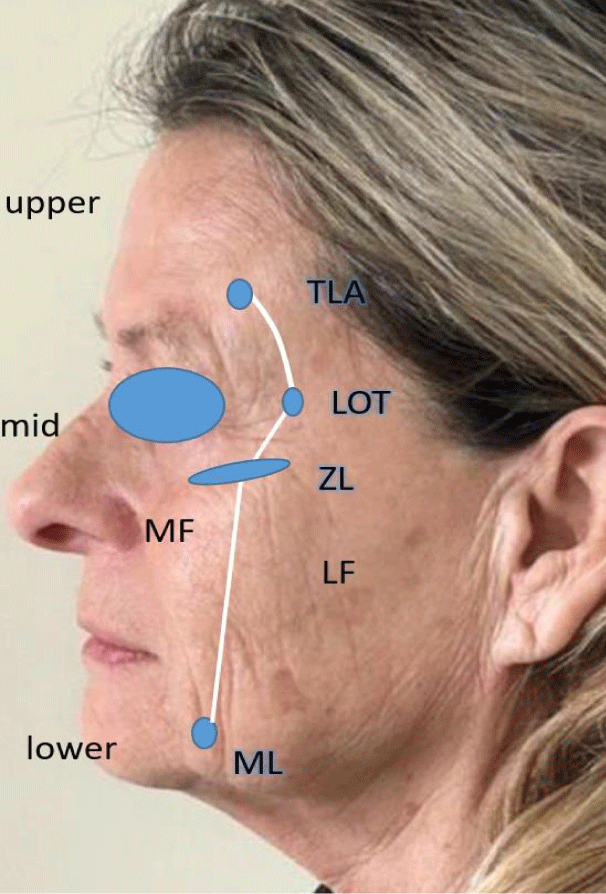
TLA: Temporal Ligamentous Adhesion; LOT: Lateral Orbit Thickening; ZL: Zygomatic Ligament; ML: Mandibular Ligament
Injection Principles based on Facial Biomechanics
Leveraging the previous principles, the following treatment steps of the Domino Effect can be derived:
- Lateral face first: This principle emphasizes treating the lateral face first to achieve a preconditioning effect of the medial midface. This can be attributed to the lifting effect achieved due to the parallel layered arrangement. Via this preconditioning, less product is required to achieve optimal aesthetic outcomes.
- Upper face first: Addressing the upper face before the middle and lower face ensures that lifting effects are maximized. This principle does not only apply for full-face treatments but also single-region treatments: For instance, if the lower face is the reg this principle leverages the parallel arrangement of layers in the lateral face for better results.
- Deep injections first: By prioritizing deep injections before superficial ones the bony fundament of the face can be supported which helps in achieving more effective and lasting results [1].
Ultrasound Guidance during Injections
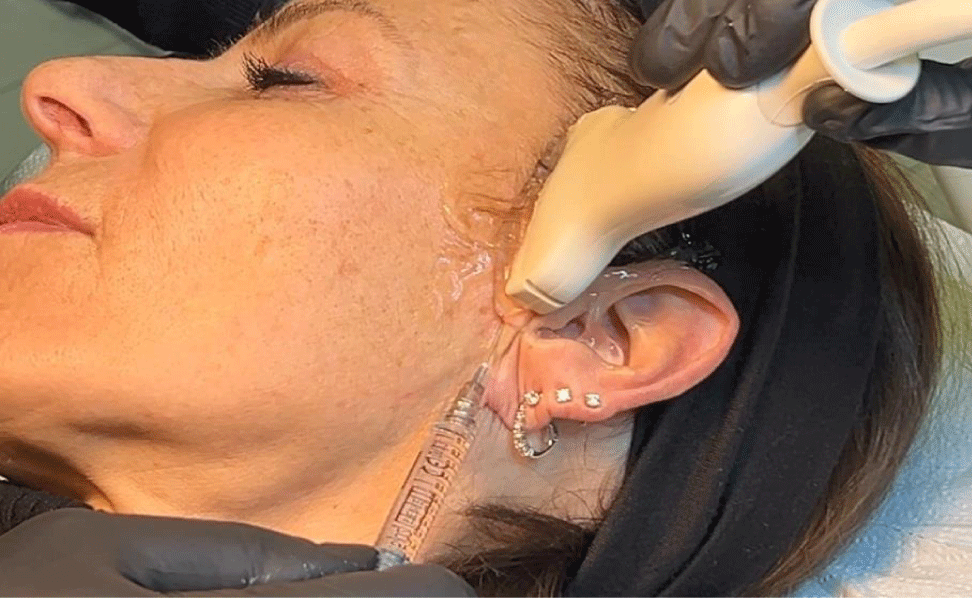
Despite its proven safety and efficacy in clinical practice, every aesthetic treatment carries an inherent risk of adverse events, often due to injury of vascular or neural structures in the face. In a full-face approach, detailed knowledge of the topographical anatomy of these structures is crucial to minimize risks. Ultrasound guidance has emerged as an effective real-time imaging modality for facial aesthetic treatments [13], both in the prevention and treatment of complications [14-18]. However, the additional use of ultrasound, while beneficial, also presents certain drawbacks. Therefore, a nuanced understanding is required for aesthetic practitioners to determine whether integrating ultrasound into their clinical practice is appropriate.
Pros and Cons of ultrasound guidance
Pros:
- Enhanced safety: Ultrasound guidance provides real-time visualization of anatomical structures. During filler injections, the risk of vascular and nerve injury is effectively reduced as the injector can stay away from high-risk areas and layers, ultimately preventing complications such as vascular occlusion and nerve damage (Figure 2).
- Precision: Filler material can be placed more precisely in the intended location and layer. This improves aesthetic outcomes by allowing for greater accuracy and tailoring treatments to the patient’s individual anatomy.
- Patient confidence: The use of advanced ultrasound technology increases patient trust in the safety and efficacy of the procedure. The employment of additional technology can be seen as an “additional service” and emphasizes the professional attitude the practitioner has towards their patients’ treatments. This can help patients feel more reassured, leading to higher satisfaction and confidence in the practitioner.
Cons:
- Cost: Ultrasound equipment and training represent a significant money and time investment, which can increase the overall cost of procedures. Hence, the treatment costs will increase, potentially decreasing the accessibility to treatments for some patients.
- Time-Consuming: Using ultrasound can extend procedure times due to the need for setup, calibration, and real-time monitoring. This may affect efficiency in busy clinical settings and patient convenience.
Further studies and clinical experiences will help to better understand the full scope of benefits and limitations of using ultrasound in filler injections.
Injection Strategy
The Domino Effect involves a step-by-step injection protocol [19] that targets specific facial regions to maximize lifting and volumizing effects while maintaining a natural look (Figure 3). Leveraging on the principles of facial biomechanics, the chronological order for this technique is:
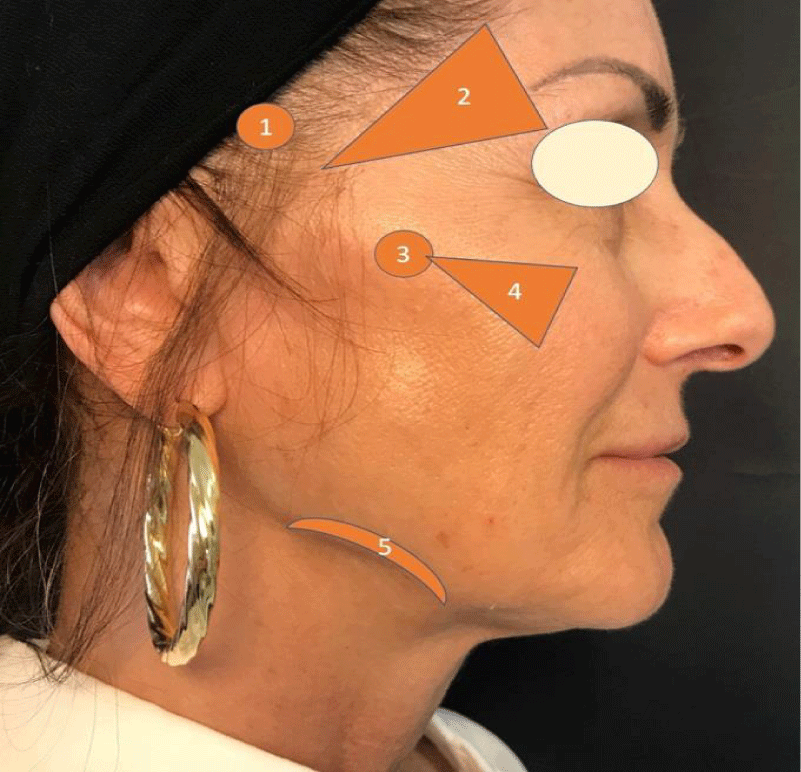
1: Bolus in temples subcutaneous tissue under hair
2: Fan technique in medial temples in subcutaneous tissue
3: Deep gun shot on zygomatic bone
4: Fan technique for medial cheeck bones
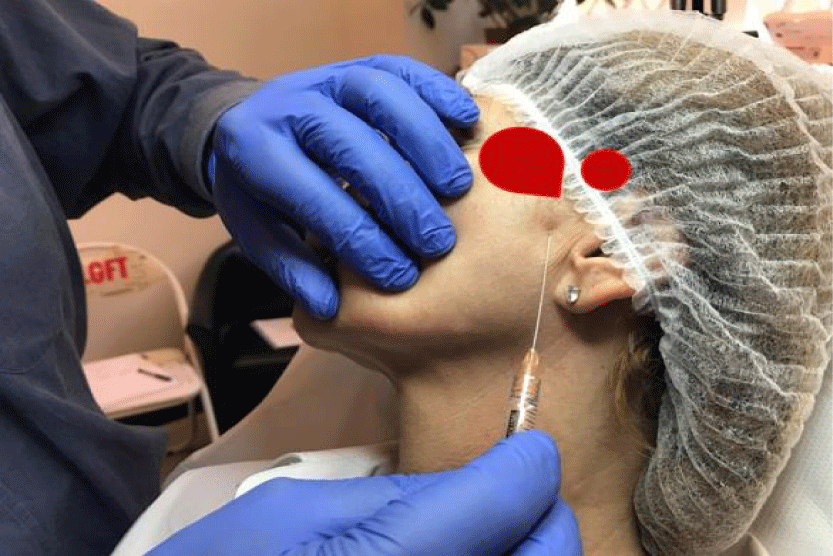
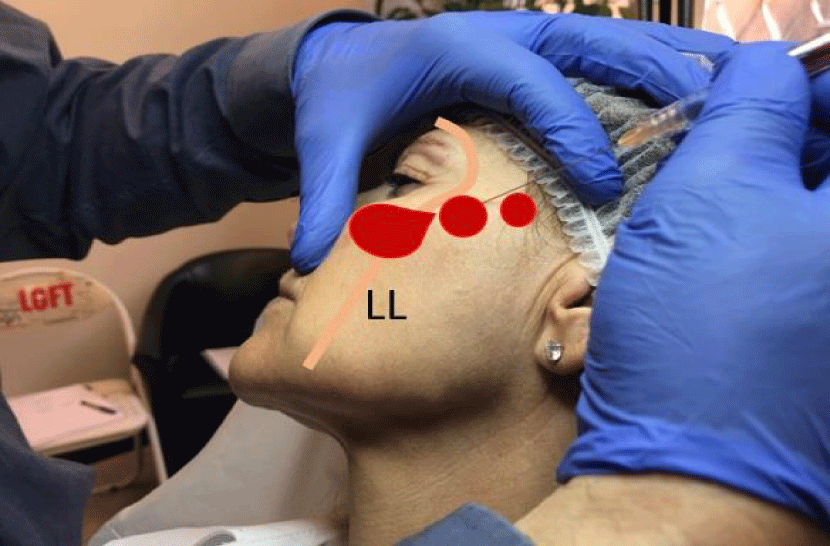
- Temporal lifting: The process begins with lifting the temporal area. By injecting 1 ml per side using the temporal lifting technique, this step provides an initial lift to the upper face. Additionally, temporal voluminization with 0.5 ml per side adds volume, enhancing the overall lifting and rejuvenating of the upper face (Figure 4).
- Midface correction: Next, the midface is treated to enhance the cheekbones and under-eye area. By injecting 0.2 ml at three points along the zygomatic arch per side, the contour of the cheekbones is enhanced. Malar volumization, with 0.2 ml per side, restores youthful fullness to the cheeks and reduces the appearance of under-eye hollows. A deep injection of 0.3 ml per side into the piriform fossa provides additional structural support and enhances midface correction (Figure 5).
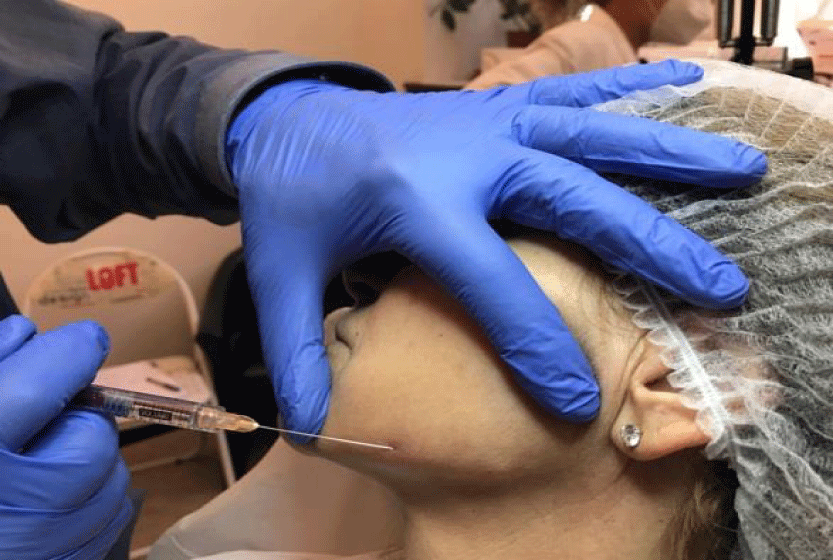
- Jawline treatment: Lastly, the jawline and lower face are addressed. Using 0.3 ml with the Fan Technique, the mandibular angle is defined and enhanced, providing a sharper jawline. Two points along the jawline are further injected with 0.2 ml each to define and sculpt the lower face, reducing the appearance of jowls and creating a more youthful and contoured look (Figure 6).
After completing the injection technique, it has been recommended to use the FILLMED Skin Perfusion AA-Lift Serum to maintain and enhance the results. The serum should be applied in the mornings and/or evenings before applying cream, providing a fluid lifting texture that supports elasticity and firmness.
Product Selection and Rheology
- The choice of soft tissue fillers is critical for safe and effective application of the Domino Effect. The ideal filler should have high elasticity and cohesivity (G’) to maintain structure and lift while being easy to inject, sculpt and position in the tissues.
- ART FILLER® Volume, with its viscoelastic properties and lidocaine for pain management, is often used due to its optimal rheological characteristics for facial lifting and volumizing. The choice of product was further also based on the long-lasting effect of ART FILLER as well as on its tissue induction capacity. The ability of the product to stimulate adipocytes allows not for just short-term volumizing but also for a long-term regenerating and rejuvenating effect [20,21].
Clinical Validation and Results
Studies have shown that the Domino Effect can significantly improve facial aesthetics. Clinical validations have demonstrated the effectiveness of temporal lifting and volumizing techniques in achieving desired outcomes with fewer complications and longer-lasting results (Figure 7).
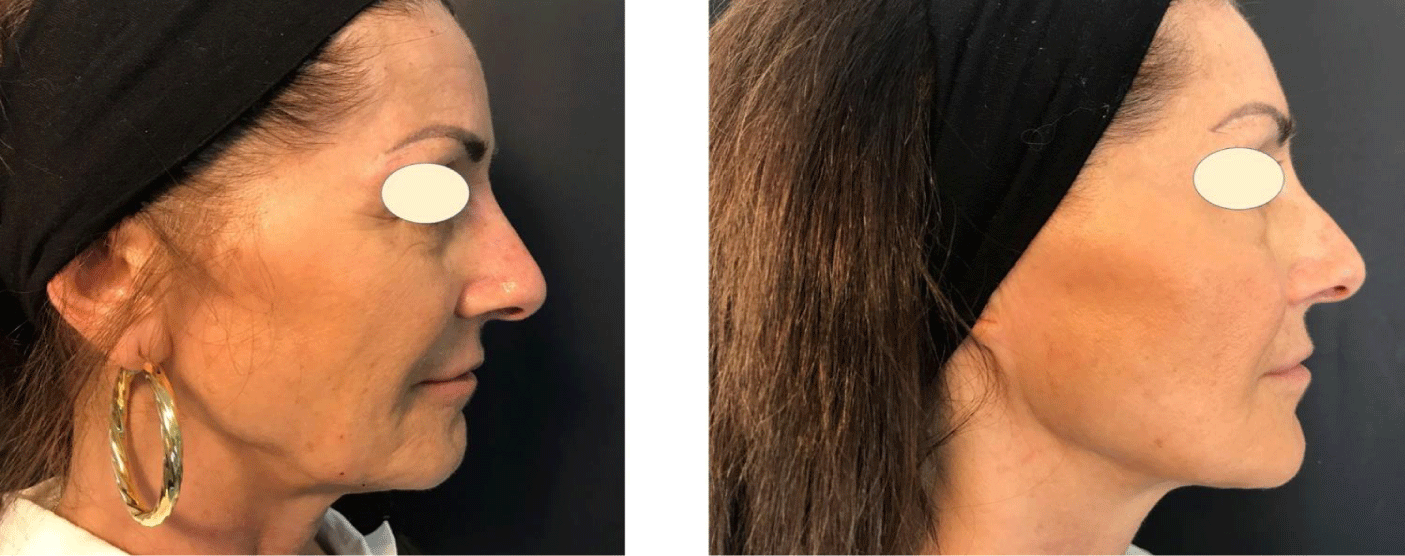
Before-and-after images from clinical trials illustrate the substantial improvements in facial contour and symmetry following the Domino Effect. Patients typically experience immediate results, with further enhancements observed over the subsequent months as the fillers integrate with the facial tissues.
Conclusion
The Domino Effect represents a significant advancement in facial aesthetic treatments, offering a strategic and scientifically-backed approach to facial rejuvenation. By understanding and leveraging basic biomechanical principles of facial structures, practitioners can achieve natural, harmonious results that enhance the overall appearance and confidence of their patients.
As with any medical procedure, it is essential for practitioners to be thoroughly trained in the Domino Effect and to adhere to best practices to ensure patient safety and optimal outcomes. With its innovative approach and proven efficacy, the Domino Effect is poised to become a standard in aesthetic facial treatments.
References
- Freytag L, Alfertshofer MG, Frank K, Moellhoff N, Helm S, Redaelli A, Voropai D, Hernandez CA, Green JB, Cotofana S. Understanding Facial Aging Through Facial Biomechanics: A Clinically Applicable Guide for Improved Outcomes. Facial Plast Surg Clin North Am. 2022 May;30(2):125-133. doi: 10.1016/j.fsc.2022.01.001. PMID: 35501049.
- de la Guardia C, Virno A, Musumeci M, Bernardin A, Silberberg MB. Rheologic and Physicochemical Characteristics of Hyaluronic Acid Fillers: Overview and Relationship to Product Performance. Facial Plast Surg. 2022 Apr;38(2):116-123. doi: 10.1055/s-0041-1741560. Epub 2022 Feb 3. PMID: 35114708; PMCID: PMC9188840.
- Fundarò SP, Salti G, Malgapo DMH, Innocenti S. The Rheology and Physicochemical Characteristics of Hyaluronic Acid Fillers: Their Clinical Implications. Int J Mol Sci. 2022 Sep 10;23(18):10518. doi: 10.3390/ijms231810518. PMID: 36142430; PMCID: PMC9503994.
- Redaelli A. Facial aging. Manual of aesthetic medicine. OEO Firenze. 2022.
- Swift A, Liew S, Weinkle S, Garcia JK, Silberberg MB. The Facial Aging Process From the "Inside Out". Aesthet Surg J. 2021 Sep 14;41(10):1107-1119. doi: 10.1093/asj/sjaa339. PMID: 33325497; PMCID: PMC8438644.
- Zargaran D, Zoller F, Zargaran A, Weyrich T, Mosahebi A. Facial skin ageing: Key concepts and overview of processes. Int J Cosmet Sci. 2022 Aug;44(4):414-420. doi: 10.1111/ics.12779. Epub 2022 Jul 8. PMID: 35426152; PMCID: PMC9543134.
- Farkas JP, Pessa JE, Hubbard B, Rohrich RJ. The Science and Theory behind Facial Aging. Plast Reconstr Surg Glob Open. 2013 May 7;1(1):e8-e15. doi: 10.1097/GOX.0b013e31828ed1da. PMID: 25289202; PMCID: PMC4174174.
- Cotofana S, Lachman N. Anatomy of the Facial Fat Compartments and their Relevance in Aesthetic Surgery. J Dtsch Dermatol Ges. 2019 Apr;17(4):399-413. doi: 10.1111/ddg.13737. Epub 2019 Jan 30. PMID: 30698919.
- Ingallina F, Alfertshofer MG, Schelke L, Velthuis PJ, Frank K, Mardini S, Millesi E, Ehrl D, Green JB, Cotofana S. The Fascias of the Forehead and Temple Aligned-An Anatomic Narrative Review. Facial Plast Surg Clin North Am. 2022 May;30(2):215-224. doi: 10.1016/j.fsc.2022.01.006. PMID: 35501059.
- Freytag DL, Alfertshofer MG, Frank K, Melnikov DV, Moellhoff N, Swift A, Heisinger S, Gotkin RH, Ehrl D, Cotofana S. The Difference in Facial Movement Between the Medial and the Lateral Midface: A 3-Dimensional Skin Surface Vector Analysis. Aesthet Surg J. 2022 Jan 1;42(1):1-9. doi: 10.1093/asj/sjab152. PMID: 33784397.
- Casabona G, Frank K, Koban KC, Freytag DL, Schenck TL, Lachman N, Green JB, Toni S, Rudolph C, Cotofana S. Lifting vs volumizing-The difference in facial minimally invasive procedures when respecting the line of ligaments. J Cosmet Dermatol. 2019 Oct;18(5):1237-1243. doi: 10.1111/jocd.13089. Epub 2019 Aug 12. PMID: 31402563.
- Casabona G, Bernardini FP, Skippen B, Rosamilia G, Hamade H, Frank K, Freytag DL, Sykes J, Onishi EC, Cotofana S. How to best utilize the line of ligaments and the surface volume coefficient in facial soft tissue filler injections. J Cosmet Dermatol. 2020 Feb;19(2):303-311. doi: 10.1111/jocd.13245. Epub 2019 Dec 15. PMID: 31840373.
- Linova T, Linovs V, Redaelli A. Ultrasound-guided hyaluronic acid filler injections for temporal augmentation: A case report of two patients. J Dermat Cosmetol. 2024;8(2):44-46.
- Lee W. Hyaluronic Acid Filler Injection Guided by Doppler Ultrasound. Arch Plast Surg. 2023 Aug 2;50(4):348-353. doi: 10.1055/s-0043-1770078. PMID: 37564711; PMCID: PMC10411166.
- Shekarriz P, Shojaee P. Ultrasound-assisted management of filler-related complications: Report of a successful treatment of delayed-onset nodules related to polycaprolactone-based filler. Clin Case Rep. 2022 Nov 27;10(11):e6646. doi: 10.1002/ccr3.6646. PMID: 36447675; PMCID: PMC9701876.
- Mlosek RK, Migda B, Skrzypek E, Słoboda K, Migda M. The use of high-frequency ultrasonography for the diagnosis of palpable nodules after the administration of dermal fillers. J Ultrason. 2021;20(83):e248-e253. doi: 10.15557/JoU.2020.0044. Epub 2020 Dec 18. PMID: 33500791; PMCID: PMC7830082.
- Iwayama T, Hashikawa K, Osaki T, Yamashiro K, Horita N, Fukumoto T. Ultrasonography-guided Cannula Method for Hyaluronic Acid Filler Injection with Evaluation using Laser Speckle Flowgraphy. Plast Reconstr Surg Glob Open. 2018 Apr 20;6(4):e1776. doi: 10.1097/GOX.0000000000001776. PMID: 29876194; PMCID: PMC5977941.
- Schelke LW, Velthuis PJ, Decates T, Kadouch J, Alfertshofer M, Frank K, Cotofana S. Ultrasound-Guided Targeted vs Regional Flooding: A Comparative Study for Improving the Clinical Outcome in Soft Tissue Filler Vascular Adverse Event Management. Aesthet Surg J. 2023 Jan 9;43(1):86-96. doi: 10.1093/asj/sjac227. PMID: 35951759.
- Redaelli A. Temporal zygomatic lifting of the mandibulare edge with high G’ fillers. Prime. 2022;20:25.
- Nadra K, André M, Marchaud E, Kestemont P, Braccini F, Cartier H, Kéophiphath M, Fanian F. A hyaluronic acid-based filler reduces lipolysis in human mature adipocytes and maintains adherence and lipid accumulation of long-term differentiated human preadipocytes. J Cosmet Dermatol. 2021 May;20(5):1474-1482. doi: 10.1111/jocd.13794. Epub 2020 Nov 4. PMID: 33150734; PMCID: PMC8246837.
- Braccini F, Fanian F, Garcia P, Delmar H, Loreto F, Benadiba L, Nadra K, Kestemont P. Comparative clinical study for the efficacy and safety of two different hyaluronic acid-based fillers with Tri-Hyal versus Vycross technology: A long-term prospective randomized clinical trial. J Cosmet Dermatol. 2023 Feb;22(2):473-485. doi: 10.1111/jocd.15200. Epub 2022 Jul 19. PMID: 35770300; PMCID: PMC10084174.





Content Alerts
SignUp to our
Content alerts.
 This work is licensed under a Creative Commons Attribution 4.0 International License.
