
Medicine Group. 2024 September 13;5(9):1122-1126. doi: 10.37871/jbres1999.





 Review Article
75% Reduction in Packing Variation of in-House Central Sterile Supply Unit Products in a Restructured Hospital in Singapore
Mary Chua Chye Phing1, Lam Loo Keow2, Mohammad Ghazali Bin Idris3, Koh Tock Lee4, Jeff Tang Gui Feng5, Chen Ling Jun6, Sabrina Koh Bee Leng7* and Moarie Grace Tan8
2Staff Nurse, Central Sterile Supply Unit, Singapore
3Senior Healthcare Attendant, Central Sterile Supply Unit, Singapore
4Senior Instrument Technician Associate, Central Sterile Supply Unit, Singapore
5Senior Executive, Central Sterile Supply Unit, Singapore
6Nurse Clinician, Nursing Education & Development, Singapore
7Deputy Director Nursing, Nursing Education & Development, Singapore
8Assistant Director Nursing, Operating Theatre Services, Singapore
Introduction
The hospital’s Central Sterile Supply Unit (CSSU) operates on strict regulatory standards and uses innovations like automated systems to uphold high standards of sterility [1,2].
CSSU uses the Total Documentation (T-Doc) instrument management system to meticulously track and document every instrument and medical device processed within the unit, ensuring end-to-end traceability. This system enables real-time monitoring and recording of sterilisation parameters, inventory management, and quality assurance, reducing errors and improving compliance with regulatory standards.
CSSU’s primary role is reprocessing of surgical instruments, ensuring they are sterile and ready for use. A key aspect is the precise packing of instruments within sets before autoclaving [3]. Over the last 20 years, the author’s professional experiences of conducting multiple audits at different institutions’ CSSUs of Singapore Health Services (SingHealth), have found that despite best practices, variations often occur in the arrangement and positioning of instruments, disrupting standardisation and making it difficult for OT staff to locate and use the tools needed during surgery. This inconsistency can lead to inefficiencies and delays, impacting patient outcomes and the reliability of the instrument sets for OT nurses.
Despite the importance of surgical instrument processing and packing for the safety of surgical care in hospitals [4], sterile instrument packing issues and its variabilities have been rarely studied to date. The commitment to minimising packing variations is crucial for maintaining high standards of sterility and enhancing the overall workflow within the OT. By addressing these variations and striving for consistency, the CSSU can significantly improve surgical procedures' operational efficiency and effectiveness, ultimately contributing to better patient care and satisfaction among healthcare providers.
Background
Variations in packing methods within the CSSU can lead to confusion and inconsistency. Senior staff use different methods based on personal preference or situational suitability (Figure 1), while junior staff tend to adopt the preferences of their mentors without fully understanding the reasons. This lack of understanding can disrupt the standardisation crucial for maintaining efficiency and reliability in the sterilisation process. Standardised training and clear guidelines can address this issue and improve the overall effectiveness of CSSU operations.

Root Cause Analysis
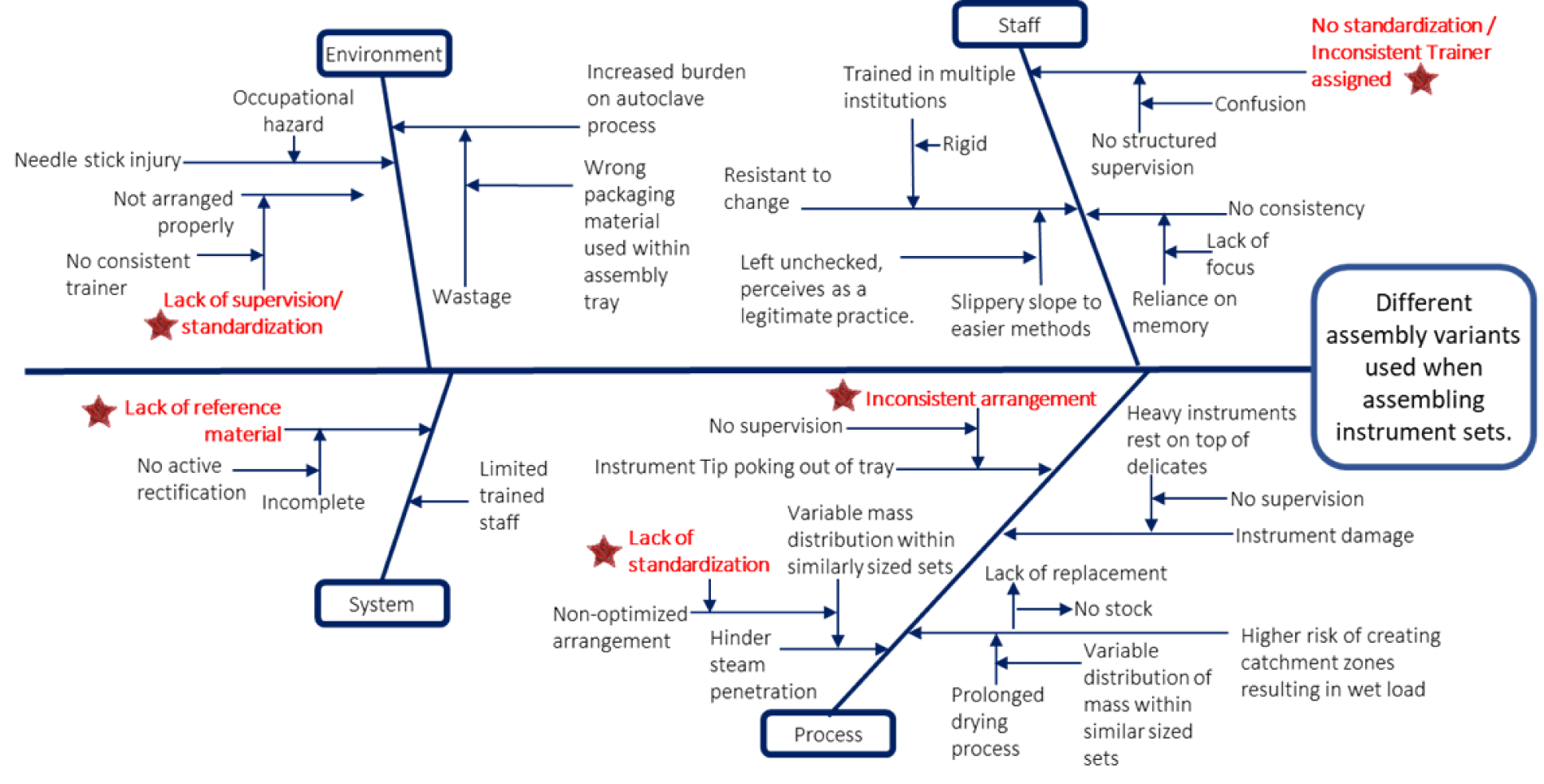
The Ishikawa diagram (Fishbone model) was employed to identify and address the fundamental factors causing these variations and to identify strategies for effective and sustainable solutions (Figure 2) [5].
Stakeholder onboarding & change management
Standardising packing methods often created tension between the focus on "packable" sets and OT nurses' emphasis on "ease of use." Achieving sustainable solutions required developing a flexible, responsive mechanism to monitor and adapt to changes (Figure 2). This approach aligns packing methods with operational efficiency and user experience, fostering collaboration and long-term success.
Redefining standards from “Acceptable” to “Quality”
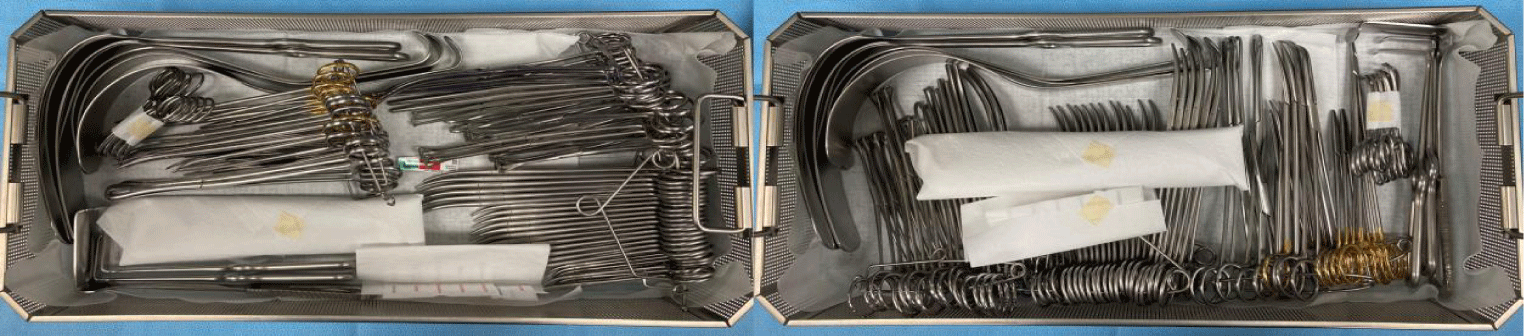
While many acceptable packing methods exist (Figure 3), quality driven packing established more rigor in terms of standardised packing procedures, ensuring that all methods meet sterility requirements, enhance efficiency, and improve OT nurses' satisfaction and patient care outcomes.
Intervention and Initiatives
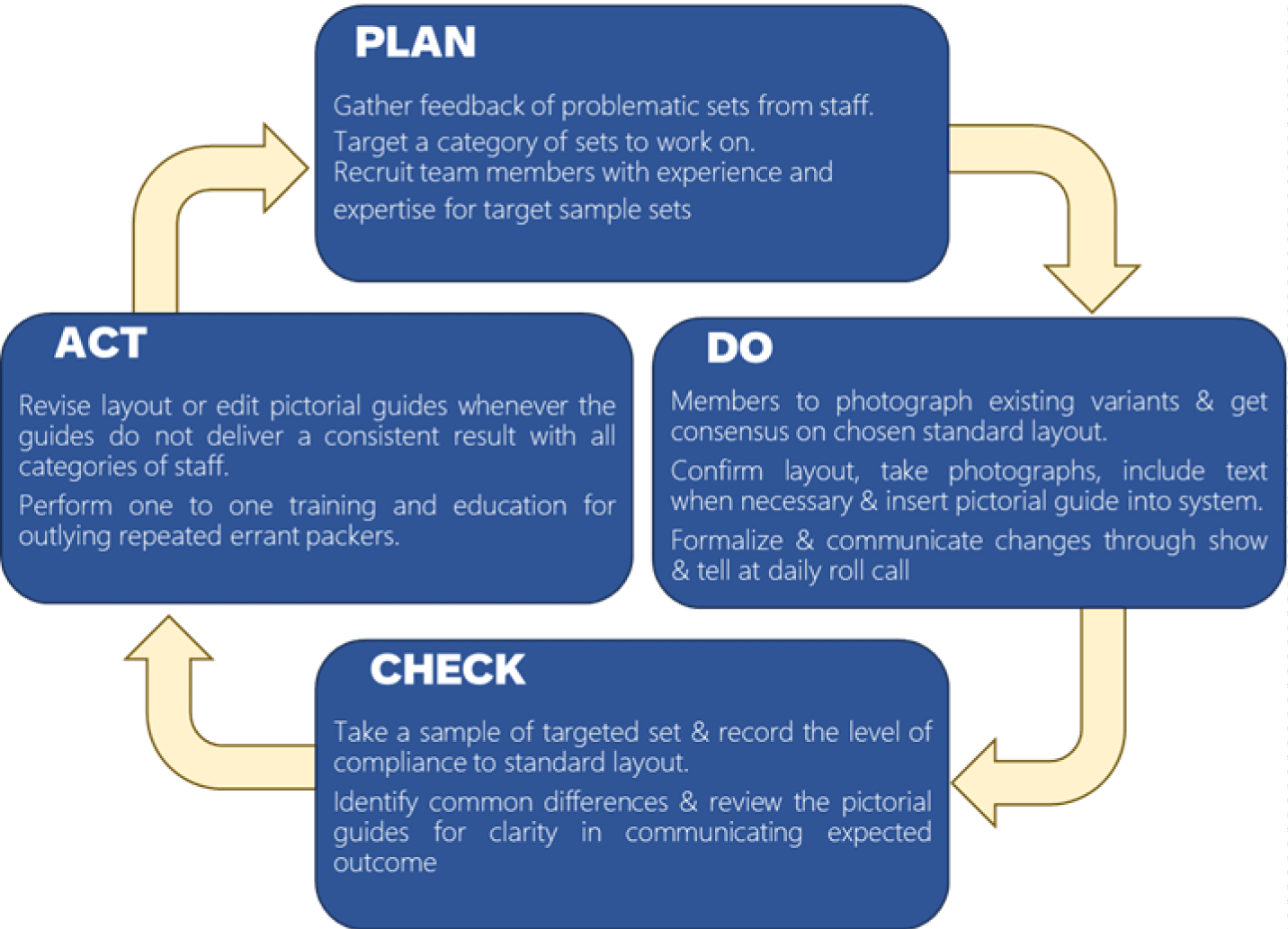
The PDSA model was adopted to evaluate the packing process; including identifying and reviewing packing sets that deviate from the standard layout and establishing a standard layout that eliminates deviations (Figure 4) [6].
Results and Achievements
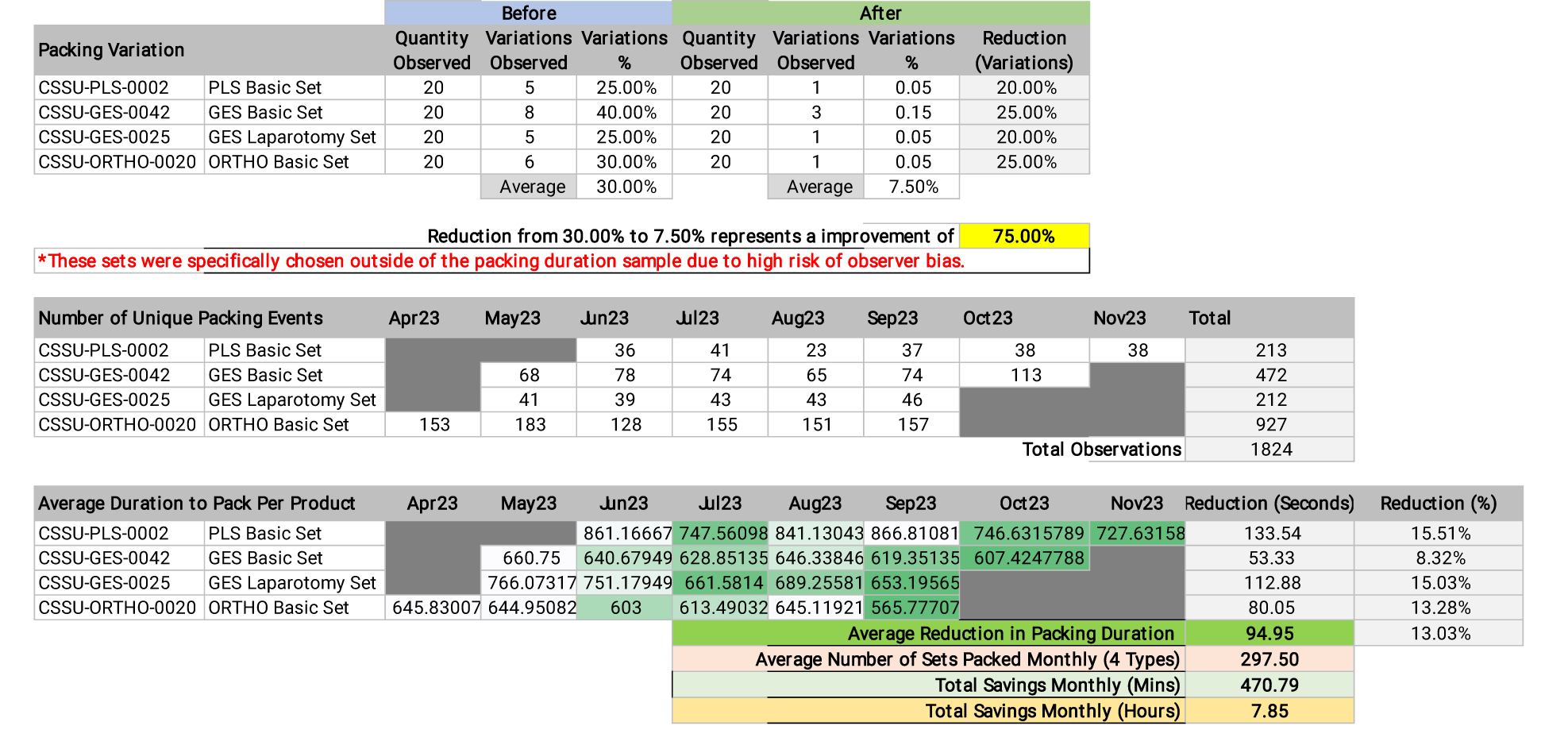
Following the intervention as shown in Figure 4, significant success was achieved in reducing packing variations, lowering the variation rate from 30% to 7.5%, marking a 75% overall improvement. Additionally, the average packing duration decreased, with each set now taking 1.58 minutes less to pack. Since 297 target sets are packed monthly, this reduction saves 7.85 hours per month (Figure 5). Financially, this improvement results in median annual manpower cost savings of SGD$2,910.78.
Crucial to these achievements has been the implementation of a continuous feedback loop involving both CSSU staff assigned to the packing area and OT users. This iterative process is instrumental in refining packing methods, ensuring practical and sustainable improvements. These results underscore the project's success in enhancing operational efficiency and highlight the potential for sustained performance improvements in future set setups.
Sustainability and Scalability of the Project
This project's sustainability and scalability are ensured by critical factors such as:
- Continuous feedback loop involving CSSU staff and OT users is crucial for maintaining and enhancing packing methods, fostering continuous improvement, and keeping processes responsive to real-time needs.
- Redefining deliverables through a quality-focused lens creates a robust, adaptable framework that maintains high standards.
- A reactive monitoring system allows for continuous evaluation and adjustment of practices, ensuring sustained improvements.
- Standardised training programs that equip staff with the necessary skills to replicate successful practices across teams.
- Comprehensive documentation of improved methods ensures easy adoption across other units, thus maintaining consistency and quality.
The instrument management system used by CSSU is able to view each photograph of the instrument trays that is being uploaded and scan the unique barcode employed on each instrument tray. The checklist together with the packing set is then shown on the screen. Within the hospital, CSSU provides services to many surgical disciplines and thus have more than 10,000 unique single instruments and slightly over 1000 unique product sets. The sets layout instructions and packing methods are carefully planned out and photos are uploaded into the instrument management system. Advanced instrument management systems support scalability by handling larger data volumes and complex workflows. The principles and practices developed are adaptable to various healthcare settings, allowing the focus on quality, efficiency, and continuous improvement to be applied broadly.
Conclusion
This project, by leveraging on advanced instrument management system, significantly improved packing processes within the Central Sterile Supply Unit (CSSU), achieving a 75% reduction in packing variations and notable time and manpower costs savings. Shifting to quality-centric practices enhanced operational efficiency and user experience. Continuous feedback loops and flexible monitoring systems have been crucial in maintaining and adapting these improvements.
The tangible benefits, including time and cost savings, underscore the project's success and encourage sustained adherence to the new practices. Standardised training, comprehensive documentation, and advanced instrument management systems support scalability, allowing broader implementation across healthcare settings. This project addressed CSSU challenges and laid the groundwork for improvements and expansion. Emphasising quality, continuous improvement, and adaptability, it is a model for initiatives and other practices to consider to enhance operational processes and patient safety outcomes.
References




Content Alerts
SignUp to our
Content alerts.
 This work is licensed under a Creative Commons Attribution 4.0 International License.
